Introduction
If you’ve inherited an old stamp collection or found a dusty album in an attic, you’re probably wondering if any of those stamps are valuable. The short answer is: some are, but most aren’t. This guide is for someone sitting down with an old collection, a cup of coffee, and the hope of finding a hidden treasure. We’re going to focus on the rare stamps worth money that realistically turn up in older collectionsânot museum pieces. I’ve spent years sorting through boxes and albums, and knowing what to look for is ninety percent of the game. The other ten percent is not accidentally destroying the value before you know what you have.
Why Some Stamps Are Valuable (and Most Aren’t)
Let’s get this straight from the start: the vast majority of stamps ever printed are worth less than the paper they’re printed on. That 1950s set of Christmas stamps your grandmother saved? Likely pennies. Here’s what creates real value: rarity, condition, age, and printing errors.
Rarity is the most straightforward factor. The fewer copies of a stamp that exist, the higher its potential value. Some stamps had very small print runs because of production errors or limited distribution. Condition is just as critical. A mint (unused) stamp with full original gum and perfect centering can be worth ten times what a used copy with a heavy cancel fetches. Age alone doesn’t make a stamp valuableâthere are plenty of 19th-century stamps worth a dollar. But when age combines with rarity, you get the five-figure and six-figure items you hear about.
Printing errors are the holy grail for many collectors. Misprints, inverted centers, and color errors can turn a common stamp into a rarity. Grading is the language of stamp value. Mint stamps (never hinged, full gum) generally command the highest prices. Used stamps with light, well-centered cancels can still be valuable, but you’ll take a significant discount. The key is to assess the centering of the design, the condition of the perforations (no missing teeth), and the absence of faults like creases, thins, or tears. This isn’t rocket science, but it requires practice and a good magnifier.
Five Rare Stamps Worth Money You Might Find in Old Collections
These are the specific rare stamps worth money that have been found in attics, inherited collections, and estate sales. They’re not everyday items, but they’re realistic enough to be worth checking for.
1. The 1918 24-Cent Inverted Jenny
This is the most famous U.S. stamp error. The biplane in the center is printed upside down relative to the frame. Only one sheet of 100 was ever sold before the error was caught. A single Inverted Jenny in average used condition can fetch $50,000 or more. In mint condition, you’re looking at $150,000 to $300,000. Look for the dark blue color and the inverted airplane. Be warned: there are many high-quality forgeries, and any claim of an Inverted Jenny should be treated with caution until it’s certified.
2. The 1847 British Guiana 1-Cent Magenta
This is the rarest stamp in the world. Only one example is known to exist. It’s a small, rough-printed octagonal stamp on magenta paper with a black design. The last sale was over $8 million. Realistically, you won’t find this in a shoebox, but it’s worth knowing what it looks like so you don’t accidentally dismiss a similar-looking item. Focus on the unusual octagonal shape and the magenta color.
3. The 1856 Treskilling Yellow
From Sweden, this stamp is unique. It was issued in a blue color, but a single example was printed in yellow-green. It’s a one-of-a-kind color error and has sold for over $2 million. Look for the unusual yellow-green shade on a stamp that should be blue. Again, extremely rare, but a surprising number of people have brought misidentified stamps to dealers over the years.
4. The 1869 Pictorial Series (U.S.)
These stamps were the first U.S. commemorative issue. They featured images like a locomotive, a shield, and a steamship. Many exist in both perforated and imperforate versions. In mint condition, the high-value denominations can be worth thousands. Look for the 24-cent Declaration of Independence design or the 30-cent shield design. The color combinations are vivid and the centering is often poor, which makes well-centered examples particularly valuable.
5. The 1917 2-Cent Washington Red Error (Type II)
This is a more attainable error, though still scarce. The stamp should be printed in a carmine rose color. The error version appears in a vivid red. This is a subtle difference that requires careful color comparison. A used copy might sell for $200â$500, while a mint example can reach $2,000â$5,000. Look for the bright red shade and the distinctive portrait with the type II die characteristics (the letters are deeper and the shading lines are clearer).
Stamp Condition: What to Look For (and What Kills Value)
Condition is the difference between a $100 stamp and a $10 stamp, or a $10,000 stamp and a $200 stamp. Here’s how to do a basic assessment without a grading certificate.
Centering is the first thing to check. The design should be symmetrical within the white borders. Poor centering where the design is cut off on one side or unbalanced is a major value killer. The ideal is ‘well-centered’ with equal margins on all sides. Gum condition matters for mint stamps. The original gum should be intact, smooth, and free from hinges (small pieces of glassine that attach stamps to album pages). Never hinge a valuable stampâuse a stamp mount instead. A stamp that has been hinged loses a significant premium. Faults are the enemy. A crease across the stamp can halve the value. A tear, thin spot (where paper is missing), or a heavy cancel that obscures too much of the design will drop it further. Use a magnifier to check for these issues. Hold the stamp up to a light to see if there are any thin spots. Check the perforationsâare any teeth missing? A stamp with four clean corners and no faults is what you want. A used stamp with a light, well-centered cancel is far more desirable than one with a heavy, dark cancel that covers most of the design.
Common Mistakes When Sorting Through Old Stamp Collections
I’ve seen these mistakes ruin potentially valuable stamps more times than I can count. Avoid them.
- Cleaning stamps with water or chemicals: This destroys the original gum and can damage the paper. Never use water, erasers, or any cleaning solution on old stamps. You’re stripping away the value.
- Soaking stamps off envelopes too long: If you must soak stamps off paper, keep them in cool water for no more than 10-15 minutes. Soaking for hours will loosen the gum and cause the paper to become brittle and tear easily.
- Soaking stamps on colored or coated paper: Some envelopes have colored papers or coatings that can bleed onto the stamp during soaking. These stamps are usually not worth the trouble. Toss the envelope instead of risking the stamp.
- Throwing away duplicates immediately: You might think that a common stamp is worthless because you have several copies. But an error copy or a rare shade might be hiding among them. Sort duplicates, don’t trash them.
- Ignoring watermarks: Many stamps have watermarks that differentiate varieties. Not checking for them can cause you to miss a rare watermark variety. Get a watermark detector or use a few drops of watermark fluid to reveal them.
- Falling for fake rarities: There are countless forged stamps in the market. If something seems too good to be true, it probably is. Don’t buy rare stamps from unknown sources without a certificate of authenticity.
- Storing stamps in bad conditions: Humidity, sunlight, and heat are all enemies. An old album in a damp basement is a death sentence for stamps. Mold and fading are irreversible.
Tools You Need for Sorting and Evaluating Stamps
You don’t need a professional laboratory, but these basic tools will save you from costly mistakes and help you evaluate your finds accurately.
- Stamp Tongs: Never touch stamps with your fingers. Oil and dirt will degrade the paper. A good pair of stamp tongs with rounded tips costs around $10. It’s the most essential tool.
- Magnifier with LED: A 5x to 10x magnifier is critical for checking centering, perforations, and small faults. The LED light is essential for seeing details in dim light. A decent one is around $15â$20.
- Watermark Detector: For $10â$15, you can get a simple black plastic tray and a few drops of watermark fluid. You place the stamp face down, add fluid, and the watermark appears. This is how you separate common stamps from rare watermark varieties.
- Perforation Gauge: This tool measures the number of perforations per two centimeters. It’s essential for identifying different perforation varieties that can drastically affect value. A simple one costs about $8.
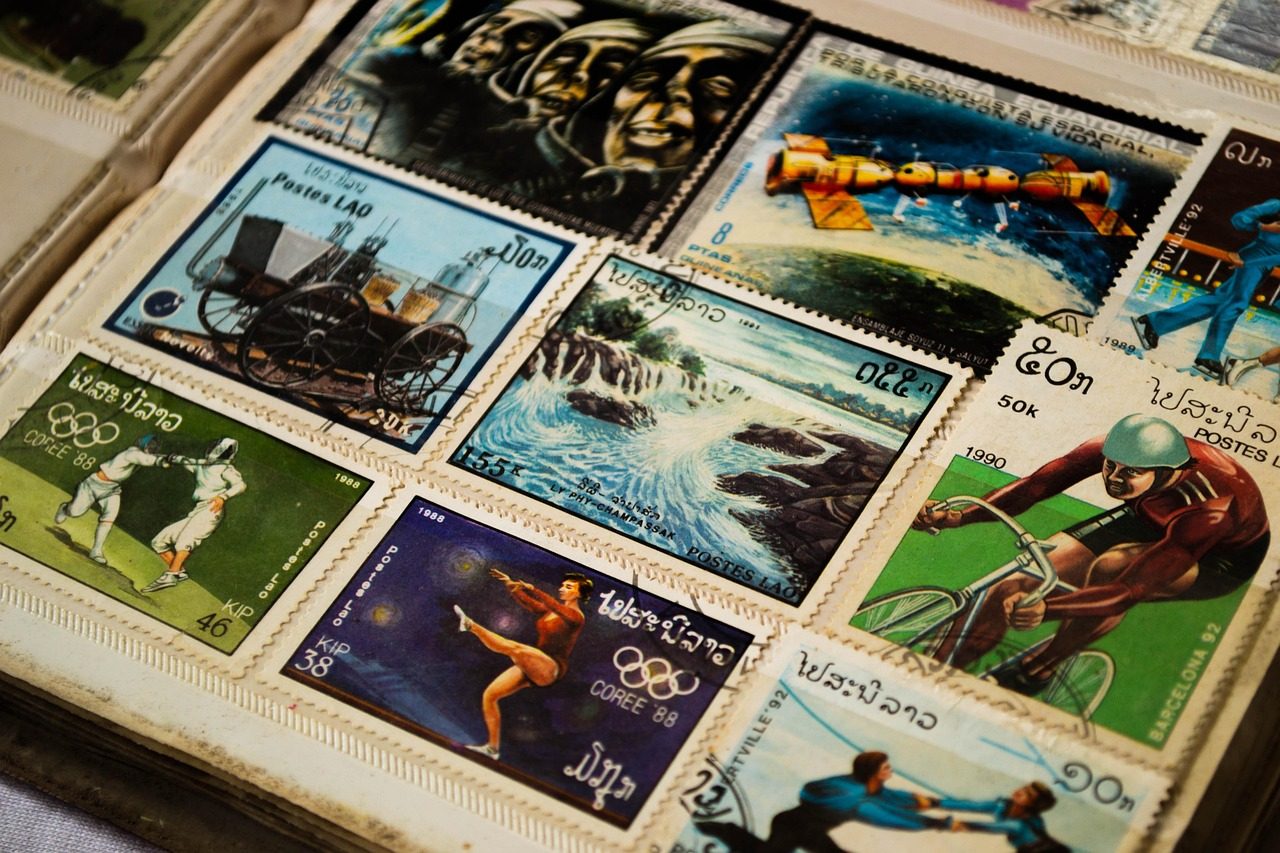
- Stockbook: A high-quality stockbook with acid-free pages and black or white strips to hold stamps is the best way to store them without harming their condition. Avoid magnetic pages or albums with PVC. A good stockbook is around $25â$40.
- Reference Catalog: The Scott Standard Postage Stamp Catalogue is the industry standard in the U.S. It gives you approximate values and detailed identification information. A used copy is affordable. For digital reference, an online subscription to Scott might be more practical.
You can find affordable stamp collecting starter kits on Amazon that include tongs, a magnifier, and a perforation gauge. They’re not professional grade, but they’ll serve you well for sorting an old collection.
Where to Get Your Stamps Professionally Appraised
When you’ve identified what you think might be a valuable stamp, getting a professional appraisal is the next logical step. Don’t accept an offer from a dealer at a show without a written estimate. Here’s the practical reality.
The American Philatelic Society (APS) offers a reputable appraisal service for members. They’ll give you a fair market estimate. The cost is usually modest, around $25â$50 for a single stamp, and they provide a written document. The Philatelic Foundation (PF) and Professional Stamp Experts (PSE) are the top certification services. They authenticate stamps and assign a grade. This is critical for high-value items. Expect to pay around $20â$40 per stamp for a certificate of authenticity, plus shipping.
Be extremely careful about shipping valuable stamps. Use registered mail with insurance that covers the full value. Put the stamp in a small, secure holder within a padded envelope. Do not write ‘stamps’ on the package. The delivery confirmation is not enoughâhave the package signed for. A dealer who offers you cash on the spot without taking the time to inspect the stamp under a magnifier or look it up in a catalog is likely trying to buy it cheap. Walk away. You should also get an independent appraisal from someone who has no interest in buying the stamp. Many local stamp clubs have members who can do basic appraisals for free or a small donation.
Selling Rare Stamps: Auctions vs. Direct Sale vs. eBay
Once you know what you have, you need to decide how to sell it. Each option has real tradeoffs.
Auction Houses (like Siegel, Cherrystone, or Spink) are the best for high-value rarities. They have global reach and a buyer network that’s willing to pay a premium. Their commission is generally 15% to 25% of the final sale price. You also have to wait for the auction date. A stamp cataloged at $1,000 might sell for $600â$1,200 after fees. It’s a gamble on the day. But for truly rare items, this is the road to maximum value.
Direct Sale to a Dealer is faster and simpler. You get an immediate offer, and the sale is done. The downside is that you’re selling wholesale. The dealer needs to make a profit. Expect an offer of 30% to 50% of what the stamp would sell for at auction. If you need cash quickly, this might be acceptable. For a stamp worth $500, a dealer might offer $200â$300. It’s up to you.
eBay is the most accessible option, but it’s also the riskiest. You’ll reach millions of potential buyers. You have to deal with listing fees, final value fees (around 13%), and payment processing fees. You also face the risk of scams, chargebacks, and buyers claiming non-receipt. Photograph your stamps carefully. Use a neutral background, good lighting, and a macro lens if possible. Show the front and back. List with accurate, clear descriptions. Avoid exaggerating condition. A stamp cataloged at $100 might sell for $20â$60 on eBay, depending on demand and how well you present it. For lower-value stamps (under $50), eBay is perfectly fine. For anything over $200, consider an auction house or a certified dealer.
How to Avoid Stamp Scams and Fake Rarities
The stamp world is not immune to fraud. Forgeries, altered colors, and fake cancels are real problems. Here’s how to protect yourself.
First, be deeply skeptical of any ‘rare’ stamp offered at a fraction of its catalog value. A real 1918 Inverted Jenny is not going to appear on eBay for $200. If the price seems too low, it’s almost certainly a forgery or a damaged copy. Second, check the seller’s reputation. On eBay, look at their feedback for stamps specifically. A profile with only a few dozen transactions for jewelry and electronics is a red flag. Third, insist on certification for any stamp over $200. A certificate of authenticity from PSE, PF, or APS is absolute proof. Do not accept a letter from the seller or a dealer without third-party certification. Fourth, learn the basics of the stamp you’re interested in. Know what the correct color, watermark, and perforation should be. There are many subtle differences that forgeries get wrong. Fifth, beware of ‘altered’ stamps. Crooked perforations can be trimmed to look more centered. Colors can be chemically altered to imitate rare shades. A genuine forgery of a rare stamp can be expertly done. Your only protection is third-party certification or buying from a dealer so reputable they will guarantee authenticity.
Organizing a Collection for Maximum Value (Without Over-Spending)
How you store your stamps directly affects their value. Proper storage doesn’t have to be expensive, but it does require care.
The best option is a high-quality stockbook. These have archival-quality pages and clear, flexible strips that hold stamps without PVC or harmful adhesives. You can get a good one for $25â$40. Avoid ‘magnetic’ albums with clear plastic sleevesâthey can trap moisture and cause damage over decades. For individual valuable stamps, use a stamp mount. These are clear, inert sleeves that hold the stamp in place without adhesives. They’re cheap (a few cents each) and prevent hinges from damaging the gum. Keep your collection away from direct sunlight, humidity, and extreme temperatures. A cool, dry, dark closet is perfect. Use dividers to organize stamps by country, topic, or catalog number. Do not write on the album pages with a penâuse a pencil if you need to make notes. The goal is to preserve the stamp in the exact condition you found it. Over time, a well-stored collection will always sell better than one that’s been thrown in a shoebox or treated with chemicals.
When to Hold and When to Sell: Timing the Stamp Market
The stamp market is relatively stable for classic rarities. The 1847 British Guiana 1-Cent Magenta has been appreciating steadily for over a century. But for modern errors and high-value items that aren’t unique, the market can be more volatile. My advice is to hold onto anything you think is a true rarity unless you need the money. The market for high-end stamps is small but wealthy. It’s not a liquid market like stocksâit can take months to find the right buyer. There are some seasonal trends. Spring and fall auctions often see more activity. Tax season (MarchâApril) can be a good time because people have extra cash from refunds. But generally, patience is rewarded. If you’re not in a hurry, wait for the right opportunity. Selling a stamp quickly usually means accepting a lower price.
Final Practical Tips for New Stamp Collectors
Here’s a checklist of what to do next.
- Don’t trust online prices alone. The Scott catalog is the standard. Use it. eBay prices are often inflated or artificially low.
- Join a local stamp club or the APS. The cost is minimal, and you’ll gain access to experienced members who can identify stamps and give honest advice.
- Use reference catalogs and online databases. Learn to identify watermarks, perforations, and paper types. The information is freely available.
- Be patient. Sorting an old collection is a marathon, not a sprint. Take your time, learn as you go, and don’t rush to sell.
- If you’re serious, invest in the basic tools. A good magnifier, a perforation gauge, a watermark detector, a stockbook, and a reference catalog will pay for themselves the first time they help you identify a valuable stamp. They’re not expensiveâyou can get a starter set on Amazon for under $50. That’s less than the cost of one average session with a professional appraiser.
Start sorting. Use this guide as your reference. And remember: the real reward is not just money. It’s the history you uncover and the stories those stamps have to tell.