Introduction
If you own a collectible worth serious moneyâmaybe a vintage Rolex, a rare handbag, or a signed first editionâselling it yourself can be a gamble. List it online, and you’re dealing with lowball offers, payment hassles, and the headache of proving authenticity. That’s where a good consignment shop comes in.
Consignment shops for high-end collectibles handle the hard parts: authentication, pricing, photography, listing, and sales. They take a cut, but they bring buyer trust and market access you don’t have on your own. If you’re buying, consignment gives you a shot at authenticated, often below-retail pieces you won’t find in a regular store.
This guide covers how consignment for high-end collectibles works, where to go, what to watch out for, and how to get the most from the processâwhether you’re selling or buying.
How Consignment for High End Collectibles Works
The basic process is straightforward, but details matter. You bring your itemâor submit it onlineâto a consignment shop or platform. Their experts evaluate it, check for authenticity, and suggest a price based on current market data. If you agree, they handle the listing, photography, description, and customer inquiries.
When it sells, the shop takes a commission, usually between 20% and 50% depending on the item’s value and platform. You get the remainder. Most shops have a standard contract lengthâtypically 60 to 90 daysâafter which you can extend, reduce the price, or pull the item.
What sets high-end consignment apart is the authentication layer. For a Rolex Daytona or Hermès Birkin, buyers won’t bid without proof it’s real. Reputable shops employ specialists who check serial numbers, hallmarks, stitching, and even lab-test materials. This authentication justifies their fee. For those who want to do some preliminary research themselves, a quality jewelry loupe can help you spot basic details before handing it over.
The tradeoff is control. You lose the ability to set final prices or negotiate directly with buyers. And you may wait months for a sale. But you gain access to a serious buyer pool that would never trust a private seller on Facebook Marketplace.
What Counts as a High End Collectible in Consignment
Shops specializing in this space don’t take everything. They focus on items with proven resale value, brand recognition, and a dedicated buyer base. Here’s what typically qualifies:
- Luxury watches â Rolex, Patek Philippe, Audemars Piguet, Omega. Even heavily worn pieces can sell if the mechanism is original.
- Fine jewelry â Cartier, Tiffany, Van Cleef & Arpels, plus loose diamonds and colored gemstones. Paperwork helps.
- Designer handbags â Hermès, Chanel, Louis Vuitton in current or classic styles. Limited editions get a premium.
- Rare coins and bullion â graded coins (PCGS, NGC), proof sets, and pre-1933 gold. High condition matters.
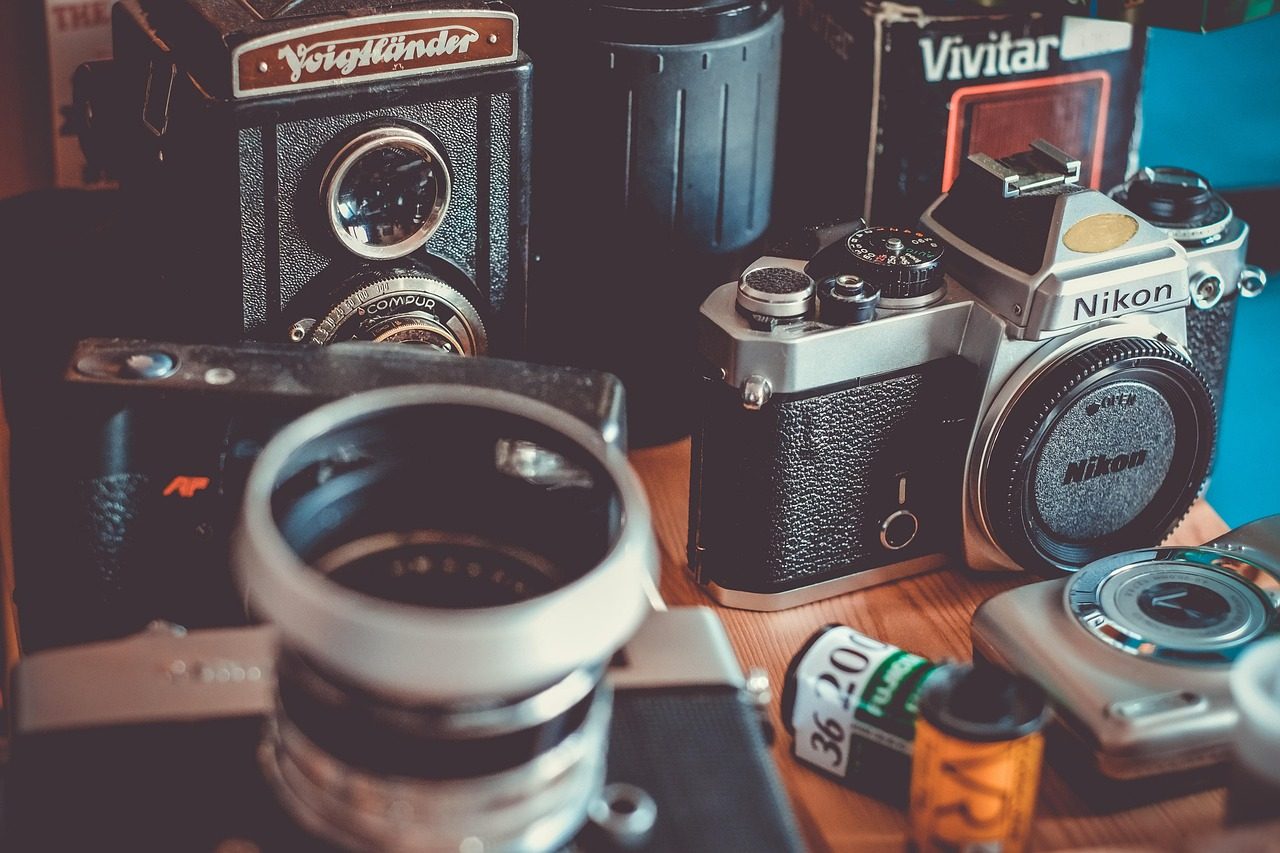
- Vintage cameras â Leica, Hasselblad, Rolleiflex in working condition with original lenses.
- Limited-edition sneakers â deadstock (unworn) pairs from Nike, Adidas, Yeezy collaborations. Box and receipt required.
- Fine art â original works by recognized artists. Prints must be numbered and signed.
A practical boundary: items worth under $500 usually aren’t worth consigning. The commission eats too much of the value, and most high-end shops set a minimum around $1,000. If your piece falls below that, consider selling it directly on eBay or a niche forum.
The Best Consignment Shops for High End Collectibles in the U.S.
No single shop is best for everything. The right pick depends on your item’s category, value, and how hands-on you want to be. Here are proven options, each with a real strength.
The RealReal
Best for luxury fashion and accessories, especially handbags and jewelry. They accept items directly or via home pickup. Commission starts around 35% for items under $500 and drops to 15% for pieces over $5,000. Their authentication team is solid for bags and watches. Downside: you can’t set a floor price easily. Example: a Chanel Classic Flap bag in good condition sold for $4,200 after a 30% commissionânet $2,940.
Sotheby’s
Best for ultra high-end items like rare watches, fine art, and important jewelry. They operate more like a hybrid of consignment and auction. Their private sales division allows fixed-price consignment with a lower profile than a public auction. Commissions are negotiable but generally start around 20%. Example: a Patek Philippe Calatrava sold privately for $18,000 with a 15% commissionânet $15,300.
Heritage Auctions
Best for coins, sports memorabilia, comics, and vintage collectibles. They’re a traditional auction house but offer consignment with buyer and seller premiums. Seller fees can be as low as 10% for high-value items. Example: a 1916-D Mercury dime graded MS-65 sold for $15,000 with a 10% seller feeânet $13,500.
Everything But The House (EBTH)
Good for estate-based collections and mid-range collectibles. They handle everything from vintage cameras to fine art to furniture. Commission is around 30%. Less ideal for single high-ticket items but solid if you’re clearing a collection. Example: a set of three Leica M-series cameras sold as a lot for $8,000 with a 28% commissionânet $5,760.
Local specialists
In major cities like New York, Los Angeles, or Chicago, independent consignment shops often focus on a single categoryâvintage watches, designer handbags, or rare books. Their commission might be slightly higher (25% to 35%), but they bring local walk-in buyers and stronger category expertise. If your item is niche, a specialist is usually worth it.
How to Choose the Right Consignment Shop for Your Collectible
Picking the wrong shop is the fastest way to lose money or time. Use this framework before signing anything.
1. Match the category
A generalist shop may lack the authentication skills for a rare coin or vintage watch. If you have a Rolex Submariner, go to a watch specialist or platform with proven watch sales. Same for handbags: The RealReal handles high volumes, but a dedicated boutique may attract more serious buyers.
2. Check commission rates and minimums
Most shops post their rates online. But for high-value items, rates are often negotiable. A $10,000 watch should command a lower commission percentage than a $1,000 bag. Ask upfront. Also ask if there’s a minimum reserve price and whether it costs extra.
3. Review marketing reach
Does the shop have a strong online presence? Do they feature items in newsletters, social media, or email campaigns? A shop with a small social following won’t reach as many buyers. For rare items, you want broad exposure.
4. Ask about timeline
Standard contracts run 60 to 90 days. Specialist shops may request longer for niche items. If you need cash quickly, a consignment shop may not be the right move. Auctions close faster, albeit with less control.
5. Read the contract carefully
Look for clauses about automatic price reductions, storage fees, and shipping costs. Some shops charge photographers’ fees or insurance premiums. Know everything before you sign.
Questions to ask before signing
- What is the commission percentage for my item’s estimated value?
- Is there a minimum reserve, and does it cost extra?
- How will my item be photographed and described?
- How long is the consignment period?
- Are there any additional fees (photography, storage, insurance)?
- What happens if my item doesn’t sell?
Common Mistakes When Selling High End Collectibles on Consignment
Even experienced collectors slip up. Here are the ones I see most often.
1. Underpricing because you’re impatient
A seller brought in a vintage Omega Seamaster worth about $3,500. They set the price at $2,800 because they wanted a quick sale. The shop agreed, and it sold within a week. The seller left $700 on the table. Let the shop’s pricing specialist guide you. If you need money fast, consignment isn’t your best route anyway.
2. Skipping multiple appraisals
One appraisal isn’t always accurate, especially for rare items. Get two or three before you commit to a price. If the shop’s estimate feels low, ask why. Good shops will walk you through comparable recent sales.
3. Ignoring authentication documentation
If your item has original paperwork, certificates, or receipts, include them. A Rolex with its box and papers sells for 20% to 30% more than a naked watch. Even a photocopy of a receipt helps.
4. Not negotiating the commission
High-value items often have room to negotiate the commission down. A $15,000 piece should not carry the same rate as a $1,000 item. Ask for a lower tier. The worst they can say is no.
5. Storing items poorly before consignment
A seller kept a vintage Leica in a damp basement for months. By the time they consigned it, the lens had developed fungus. The shop had to disclose the issue, and the sale price dropped by half. Store your collectibles in a climate-controlled spaceâcool, dry, and away from direct sunlight. Using a climate-controlled storage container can help maintain optimal conditions and protect your investment.
Buying High End Collectibles Through Consignment: What to Know
Buying through consignment is often smarter than retail, provided you know what to look for. Consignment shops price items based on current market demand, not manufacturer hype. That means you can often find authentic, pre-owned luxury goods for 30% to 50% below retail.
When buying, verify the condition grade. Shops like The RealReal use a system (e.g., “Pristine,” “Excellent,” “Good,” “Fair”). Read the description carefully. A “Good” bag may have corner wear or a missing dust bag. If condition matters to you, ask for additional photos or a video.
Provenance is your second check. For a rare coin, ask about grading history and whether it was certified by PCGS or NGC. For a watch, confirm the movement is original and the case hasn’t been polished excessively. A good shop will provide a condition report upon request.
Return policies vary. Most consignment shops allow returns within a window (typically 7 to 14 days), but some are final sale. If you’re buying a high-value item, insist on a return period. A shop that refuses is a red flag.
Negotiation works on higher-price items. If a watch is listed at $8,000 and has been sitting for two months, offer $7,200. The shop and seller may split the difference. Online platforms with a “make an offer” feature are easier. For fixed-price shops, call and ask directly.
Consignment vs. Auction: Which Is Better for High End Collectibles?
This decision comes down to your priorities.
Consignment works best when you want a fixed price, have some patience, and want to maximize your net proceeds. You set the reserve, and the shop markets your item to a targeted audience. The downside is timeline. A $5,000 watch may sit for six months.
Auction is better when you need speed, you have a very niche item, or you’re willing to let the market decide. Auctions create urgency. If two bidders want a rare coin, you may do better than the estimate. But you also risk selling below market if interest is low. And auction houses tack on buyer’s premiums (18% to 25%) that effectively lower your final take.
Situational advice:
- For a very rare, high-value item (e.g., a vintage Ferrari watch or Cartier Art Deco bracelet), auction tends to attract the right audience.
- For a more common luxury item (e.g., a used Louis Vuitton Neverfull), consignment is safer and offers a predictable outcome.
- If you are not in a hurry, consignment gives more control. If you need cash in 60 days, auction is the play.
What Consignment Fees and Commissions Really Cost You
Understanding total costs is essential. Let’s look at real numbers.
Say you consign a $2,000 designer handbag at a shop with a 30% commission. The gross sale price is $2,000. You net $1,400. If the shop charges a $50 photography fee and $25 for shipping materials, your net drops to $1,325. Factor in a 60-day hold, and your effective hourly rate may be low.
Now consider a $10,000 watch. A specialist shop might charge 20% on that value. $10,000 at 20% means you net $8,000. If you negotiate down to 15% for the high value, you keep $8,500. That $500 difference is worth the conversation.
Some shops use sliding scales: 40% on items under $1,000, 30% on items $1,000 to $5,000, 20% on items $5,000 to $20,000, and 15% above $20,000. This rewards you for consigning higher-value pieces.
Hidden costs to watch for: storage fees after 90 days, insurance fees (often 1% of item value), and unsold item return shipping. Before signing, ask for a complete breakdown of all fees and get it in writing.
The Role of Authentication in High End Consignment
Authentication is the backbone of the consignment industry. Without it, there is no trust, and without trust, buyers won’t pay premium prices.
Reputable shops use a combination of methods. For luxury watches, they check serial numbers against brand records, examine the movement, and inspect case stamps. For handbags, they verify stitching patterns, heat stamps, date codes, and hardware weight. For fine jewelry, they use spectrometers to test metal purity and diamond testers to confirm genuine stones.
A real-world caution: I knew a seller who tried to consign a Cartier Love bracelet that came with no paperwork. The shop’s expert spotted inconsistencies in the screw pattern and flagged it as counterfeit. It turned out the seller bought it secondhand online without authentication. The shop refused the item. The seller lost the purchase price entirely.
As a seller, having your own documentation speeds things up. Original receipts, brand certificates, and even a recent appraisal report help the authentication team. If your item has no paperwork, a good shop can still authenticate it, but the process may take longer.
Practical Tips for Preparing Your Collectibles for Consignment
First impressions matter. A well-presented item photographs better and commands a higher price.
Clean it properly. For watches, use a microfiber cloth to remove smudges. Don’t polish vintage pieces yourselfâyou can remove original patina, which lowers value. For handbags, use a leather cleaner specific to the brand. For coins, do not clean them at all. Any cleaning reduces numismatic value.
Gather all original packaging. Box, dust bag, authenticity card, receiptâevery piece adds 10% to 30% to the final price. Even a well-worn box helps. If you have the original sales receipt, include it.
Photograph in natural light. The shop will take professional photos, but if you’re submitting online, good images help the initial evaluation. Use a neutral background and show all angles, including any damage.
Set a realistic reserve price. Research recent sales of similar items on the same platform. Don’t base your price on retail or what you originally paid. Market values shift. Use sites like WatchCharts or Chrono24 for watches, Ebay sold listings for bags and coins.
Checklist before consigning:
- Item cleaned and prepared per category guidelines
- All original packaging, certificates, and receipts gathered
- Photos taken in natural, even lighting
- Research recent sold prices for comparable items
- Multiple appraisals obtained if possible
- Questions for the shop written down and answered in writing
How to Maximize the Payout from Your Consigned Collectible
Getting the highest net takes more than picking the right shop. Timing, presentation, and negotiation all matter.
Time your listing strategically. For luxury watches, market demand spikes around major watch fairs (Geneva in March, Basel in April). Listing a Rolex or Patek in February can catch buyers who want to show off something new at those events. For handbags, the holiday season (October through December) is a strong periodâgift buyers are active and prices creep up.
Present items professionally. Even though the shop handles photography, you can provide clean backgrounds and make sure your item is lint-free. For watches, wind them so they show the correct time. For handbags, stuff them with acid-free tissue to retain their shape. A simple watch display case can help with presentation and photography.
Negotiate the commission for high-value items. As mentioned earlier, a $10,000 item with a 20% commission nets you $8,000. If you negotiate down to 15%, that’s $500 more. Do this before signing the contract, not after.
Consider timing with market demand. A real example: A collector waited to consign a Patek Philippe Calatrava until right before the Watches and Wonders show. The shop featured it in their email newsletter to high-end clients. The watch sold in three weeks for $11,500âabout 20% higher than similar pieces listed in slower months. His net, after a 15% commission, was $9,775.
Next Steps: Ready to Sell or Buy High End Collectibles?
Whether you’re selling a vintage Rolex, a Chanel bag, or a rare coin, consignment gives you a structured, low-hassle way to reach serious buyers. The key is to pick the right shop, prepare your item, and negotiate terms before signing.
If you are unsure where to start, book a consultation with a specialist shop in your item category. Many offer free evaluations. They will give you a transparent estimate of what your piece is worth and what you can expect to net. That conversation alone can save you thousands.
Consignment for high-end collectibles isn’t complicated, but it rewards preparation. Know your item, know your shop, and know your numbers.