Finding Real Treasures: A Practical Guide to Authentic Souvenir Markets in Europe
Walking through a European market is one of the best parts of travel. If you collect genuine handmade items, you already know the frustration. You see stall after stall of what looks like the same plastic Eiffel Towers, mass-produced lace, and leather goods stamped ‘Made in Italy’ that were probably made somewhere else entirely.
This guide is for the collector who wants substance, not souvenirs. It covers how to find authentic souvenir markets in Europe where local makers still sell their work. We’ll get into what to look for, where to go, and how to avoid wasting money on junk. The focus is practical, based on real scouting and buying experience.
Navigating the difference between a genuine artisan market and a tourist trap comes down to a few key things. Let’s start with how to spot the real thing.
How to Spot a Truly Authentic Souvenir Market vs. a Tourist Trap
Before you even step into a market, you can usually tell if it’s worth your time by doing a quick scan. Tourist traps have patterns that are easy to identify.
Look at the vendors. Are they locals making or selling the items themselves? In an authentic market, the person behind the counter can often tell you about their process, the materials they use, and where they learned their craft. They might have a small workshop nearby. Tourist trap vendors are often middlemen who buy in bulk from wholesalers. They won’t know much about the item’s origin.
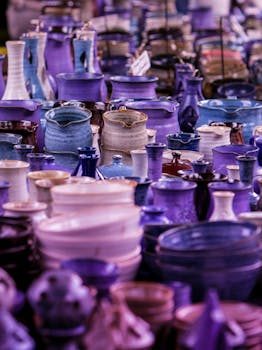
Check the materials and quality. Genuine handmade items have quirks. Slight imperfections in ceramic glaze, uneven stitching on textiles, or the natural grain of wood are signs of real craft. If every item is perfectly uniform, has a plastic feel, or smells like factory chemicals, it’s likely mass-produced. Look for maker’s marks or signatures on ceramics, woodwork, or glass. That’s a huge indicator of authenticity.
Watch the pricing. A real handmade item cannot be sold for the same price as a factory-made one. If you see a stall selling identical wooden figurines for â¬5 each right next to the main square, they are almost certainly machine-made. Authentic pieces will have a higher, more consistent price point. If the price varies wildly or the vendor drops it by half immediately, you’re in a trap.
Location matters. The most tourist-heavy spotsâright next to a cathedral, on the main pedestrian street, or near a cruise portâare prime locations for mass-market stalls. Genuine artisan markets are often a five-to-ten-minute walk away from these zones. They might be in a residential square, a converted warehouse, or a quieter street. You have to be willing to walk away from the crowds.
Turnover. If three stalls in a row are selling the same scarves, magnets, or painted plates, you’re in a tourist market. Real artisan markets have diversity. Each stall will have a distinct style or specialty. If the goods look interchangeable, skip it.
This pre-qualification saves you time and money. Once you know which markets to trust, you can plan your visits around the best ones.
Top 7 Authentic Souvenir Markets in Europe (By City & Country)
Here are seven standout markets that consistently offer quality, local items. Each has its own specialty.
1. Mercado de la Ribera, Bilbao, Spain
This is a food lover’s paradise. It’s a permanent indoor market with incredible produce, cured meats, and cheese. For souvenirs, focus on the specialty food vendors. Look for artisanal olive oil, local wine, or preserved peppers. Best visited on a weekday morning for the best selection. Prices are fair for the quality. Suits: food collectors.
2. Naschmarkt, Vienna, Austria
One of the largest and most famous markets in Europe. While it has a huge food section, there are also excellent antique and vintage stalls. You can find old postcards, silverware, and classic Viennese items. The best time is Saturday morning when the antique dealers are most active. Prices vary widely; expect to pay a premium for truly rare pieces. Suits: vintage and antique collectors.
3. Porta Portese, Rome, Italy
This massive Sunday flea market is a must for collectors of vintage and second-hand items. It’s chaotic, sprawling, and requires patience. You can find everything from old books and records to vintage clothing and military memorabilia. The real finds are in the less touristy sections toward the back. Arrive early (around 7:00 AM) for the best selection. Pricing is haggling-friendly. Suits: thrifters and vintage collectors.
4. Marché aux Puces de Saint-Ouen, Paris, France
This is the classic flea market. It’s enormous, with formal antiques and antiques shops mixed with open-air stalls. Quality is generally high, but so are prices. Focus on the markets within the market, like Marché Biron for serious antiques or Marché Vernaison for more eclectic finds. Best visited on a Saturday or Monday. Suits: serious antique collectors.
5. Green Market (Grünes Markt), Feldkirch, Austria
A smaller, authentic weekly market in a beautiful town. It focuses on local produce, cheese, bread, and crafts. The souvenir potential is in the food itemsâlocal honey, mountain cheese, and cured meats. It’s a great alternative to crowded tourist hubs. Best on a Saturday morning. Pricing is honest. Suits: food and craft collectors.
6. St. George’s Market, Belfast, Northern Ireland
A fantastic weekend market with a mix of crafts, antiques, and food. The craft stalls on weekends feature local artists, potters, and textile makers. You can buy high-quality hand-thrown pottery or woven linen items. The vibe is friendly and the quality is consistently good. Best on a Saturday. Suits: craft collectors.
7. Mercat de la Boqueria, Barcelona, Spain
While very touristy in the main aisles, if you go to the back stalls and the upstairs, you’ll find high-quality food vendors and a few artisan stalls. The key is to avoid the front rows of fruit cups and sweets. Focus on the charcuterie, cheese, and spice shops. Go early (before 10:00 AM) to beat the crowds. Prices are higher for tourists, but the food quality is top-notch. Suits: food collectors.
These markets cover different specialties. The best one for you depends on what you collect. Once you’re there, knowing what to look for in each category makes a big difference.
What to Look For: Categories of Souvenirs Worth Your Money
Not all souvenirs are created equal. Here’s a breakdown of categories and authenticity markers.
Ceramics and Pottery: Look for a maker’s mark on the bottom. Good pottery has a slightly uneven glaze, maybe tiny bubbles. The weight should feel substantial, not hollow. Avoid anything that looks perfectly symmetrical and glossyâit’s likely machine-made. A handheld magnifying glass can help you examine signatures and glaze details up close.
Textiles: Handwoven fabrics have an uneven, slightly irregular weave. Look for natural fibers like linen, wool, or cotton. Machine-made textiles are perfectly uniform and often have a synthetic feel. A hand-stitched edge or hem is a strong sign of authenticity.
Woodwork: Genuine woodcraft has a natural grain and might have slight variations in color. It should feel solid. Cheap wood items are often painted to hide flaws or are made from pressed wood. Look for dovetail joints in boxes or furniture piecesâthat’s a sign of skilled craft.
Metalwork: Real copper, bronze, or silver items will have a weight to them. Look for hallmarks or stamps on silver. Hand-hammered metal will show subtle, uneven patterns. Machine-made metalwork is perfectly smooth and uniform.
Glassware: Hand-blown glass has imperfectionsâsmall bubbles, a slight asymmetry, or a pontil mark on the bottom. If it looks perfect and uniform, it’s likely mass-produced. The colors in artisanal glass are often deeper and more complex.
Food Items: This is the easiest category to authenticate. Look for a local producer’s name and address on the label. Understand what the product should look like. Real truffles smell strong. Real balsamic vinegar is thick and syrupy. Fake food items are often cheap copies in fancy packaging.
Vintage Collectibles: This is about knowing your specific interest. Books should have a publication date. Jewelry should be tested for hallmarks. Items with obvious patina or wear should feel consistent with their age.
Quick Checklist:
- Maker’s mark or signature?
- Natural materials?
- Slight imperfections?
- Authentic weight?
- Local packaging or labeling?
If an item fails two of these, it’s probably not worth your money.
Pricing and Negotiation Etiquette at European Markets
Handmade items cost more. That research time, material cost, and labor are real. Expect to pay a premium for authenticity. A hand-thrown ceramic mug might be â¬35, while a machine-made one is â¬5. That difference is the value of craft.
Haggling is acceptable in many places, but it varies. In Southern Europe (Spain, Italy, Greece, Portugal), haggling in markets is expected, especially at flea markets like Porta Portese or street vendors. In Northern and Central Europe (Germany, Austria, Switzerland, the UK), it’s less common and can even be considered rude on non-negotiable items. Never haggle at a vendor’s fixed prices in a shop or at a high-end stall.
If you do haggle, be polite and reasonable. Start with a respectful offer and be prepared to walk away. A simple phrase like, ‘Is this the best price you can do?’ works well in English. In Italian: ‘C’è uno sconto?’ In Spanish: ‘¿Hay algún descuento?’ In French: ‘Pouvez-vous faire un meilleur prix?’ In German: ‘Gibt es einen Rabatt?’
Cash is king. Many vendors, especially at smaller markets, prefer cash. It gives you leverage for a small discount, and it avoids card fees. Have small denominations ready. A compact travel money organizer can help you keep your notes and coins sorted.
Aggressive bargaining will almost always backfire. You’re not trying to get the lowest price; you’re trying to get a fair price for a genuine item. If the price feels too high for something you truly want, politely decline. Sometimes the seller will offer a small discount before you even ask.
Seasonal vs. Year-Round Markets: Which to Prioritize
This depends entirely on when you travel and what you collect.
Seasonal markets, like Christmas markets in Germany and Austria, are excellent for unique craft items. Many cities host special summer artisan fairs or holiday bazaars. These markets often feature curated selections of local makers, so the quality is usually high. The downside is they have a limited run. If you miss the opening weekend, you might miss the best items. They are also packed with tourists, so go on a weekday evening for a better experience.
Year-round markets, like Naschmarkt, St. George’s, or the Mercado de la Ribera, are reliable. They operate on the same days weekly, so you can visit multiple times during your trip. They are great for repeat visits and for finding specific items you might have seen online. The quality can be more variable because they have permanent vendors, but the good ones are well-known. They are also better for food items because you can sample and compare over multiple visits.
Which to prioritize? If you are a craft collector, a seasonal Christmas market in a city like Nuremberg or Strasbourg is hard to beat. If you are a food or antique collector, a permanent market is more reliable. If you have only one day in a city, a year-round market is a safer bet than a seasonal one with a narrow window.
Practical Tips for Transporting Your Finds Home Safely
Getting your treasures home is half the battle. Here’s how to do it without a broken mug or a lost textile.
Packing fragile items: Don’t count on the market vendor’s packaging. Bring your own bubble wrap from a local stationery shop or bring a packing cube that you can line with clothes. Wrap each item individually, secure it with rubber bands, and cushion it in the middle of your suitcase surrounded by heavy clothes like jeans or jackets. Never put fragile items near the wheels or top of the bag. A set of packing cubes with padded sides can simplify this process.
Bring a foldable duffel bag: You will likely buy more than you expect. A 40-liter foldable duffel bag takes up almost no space in your main luggage and gives you an entire extra bag for overflow. It can be checked in as a second bag. This is one of the most useful travel purchases you’ll make.
Airline carry-on rules: Sharp items like knives or scissors must go in checked luggage. Liquids (olive oil, vinegar, sauces) over 100ml cannot go in carry-on. Pack them safely in a checked bag, inside a ziplock bag, surrounded by clothes. Travel-size packing cubes for toiletries can also be used for small sauces.
Shipping large items: For large ceramics, art, or furniture, shipping is often better than risking a flight. Look for a specialized crating service near the market. It can be expensive but ensures the item arrives safe. For cheaper items, it might not be worth the cost.
Travel insurance: Check that your policy covers item theft or damage. Some credit cards offer purchase protection. For high-value collectibles, consider a policy explicitly for the trip.
Common Mistakes Collectors Make at European Souvenir Markets
Every collector has a story of a costly mistake. Here are some common ones you can avoid.
Mistake 1: Buying the first thing you see. You walk into a market, see a beautiful bowl, and buy it immediately. Then you walk 50 meters and find three better ones. Fix: Walk the entire market once before buying anything. Note which stalls have the items you want, compare quality and price, then make your decision on the second pass.
Mistake 2: Ignoring vendor location within the market. Vendors at the entrance or near the main path often charge higher prices. The best deals and most unique items are often in the aisles that are less crowded. Fix: Head to the back or the side sections of the market first.
Mistake 3: Not asking about materials. You see a scarf you love, assume it’s cashmere, and pay â¬50. Later you find out it’s acrylic. Fix: Ask the vendor directly. ‘Is this 100% wool?’ ‘What is this metal made of?’ A genuine seller will tell you honestly.
Mistake 4: Forgetting authenticity marks. Ceramics need a maker’s mark. Silver needs a hallmark. Books need a publication page. Fix: Build a mental checklist for each item category. Before you pay, check for those marks.
Mistake 5: Overpaying because of a language barrier. You don’t know the local word for something, you ask the price, and you might pay ‘tourist tax.’ Fix: Learn the numbers in the local language. Use a calculator app on your phone to agree on a price visually. If they quote you, repeat it back. This avoids misunderstandings.
Mistake 6: Not sampling food items before buying. That jar of truffle salt might be mostly salt with a minuscule amount of truffle. Fix: Most food vendors offer samples. Take them. Taste the cheese, smell the truffle, examine the packaging. If the vendor won’t let you sample, move on.
How to Research and Plan Your Market Visits in Advance
The best market finds happen when you’re prepared. Here’s a step-by-step plan.
1. Use Google Maps. Search for ‘market,’ ‘flea market,’ or ‘antique market’ in your target city. Look at photos from recent reviews. If the photos show only mass-produced items, skip it. If you see artisan workshops or unique goods, add it to your list.
2. Check local tourism board websites. City tourism boards often have a ‘markets’ or ‘shopping’ section. They will list official markets with their days and hours. This is your most reliable source for operating times.
3. Read recent blogs and forums. The best information comes from people who have been there recently. Search for ‘best flea market [city]’ or ‘authentic souvenir market [city]’ and look for posts from the last year. Reddit, Tripadvisor, and dedicated travel forums are good resources. Pay attention to comments about quality and pricing.
4. Look for vendor lists. Some permanent markets have a list of vendors on their website. This is gold. You can pre-qualify the types of items and identify specific stalls you want to visit.
5. Create a wishlist and set a budget. What exactly are you looking for? Ceramics? Textiles? Food items? Having a clear goal prevents impulse buys. Set a spending limit per market to avoid overspending.
6. Confirm days and hours. Many flea markets and artisan markets only operate on Sundays or specific weekdays. The worst feeling is arriving on Monday to find an empty square. Check the official website or recent reviews.
Alternative Sources: Antique Shops, Flea Markets, and Estate Sales
Dedicated souvenir markets are excellent, but sometimes the best finds are elsewhere. Here are alternative sources.
Antique Shops: These are concentrated in certain districts in most European cities. They offer curated, high-quality items. The pricing is higher, but the risk of fakes is lower. They are best for specific collectibles like silverware, watches, or fine art. Expect knowledgeable owners.
Flea Markets: These are different from souvenir markets. Flea markets focus on second-hand goods. You’ll find vintage clothing, books, tools, and military items. The quality is often lower, but the potential for a bargain is higher. The Marché aux Puces de Saint-Ouen is the classic example. Prices are negotiable.
Estate Sales: These are less common for tourists but are excellent sources of genuine items. They happen when a family sells a home’s entire contents. In major cities, you can find estate sales through local listings or specialized websites. The items are often from a single collection or household, so you get a sense of history. You need patience and a flexible schedule to find them.
These require more effort. But for a serious collector willing to spend half a day digging, they can yield incredible finds. A small foldable stool for sitting down while you inspect inventory or a magnifying glass for studying details can be very helpful.
Final Checklist: What to Bring and Do Before You Go
Before you head out to the market, here’s a short list to ensure a smooth experience.
- Cash in small denominations (â¬5, â¬10, â¬20). Most vendors prefer cash.
- A reusable tote bag or backpack. Many markets charge for plastic bags.
- Comfortable walking shoes. You will be on your feet for hours.
- An offline map downloaded on your phone (Google Maps works offline).
- A notebook and pen for vendor contact information or details about an item.
- Your phone camera for taking photos of items before purchasing.
- Packing supplies (bubble wrap, a foldable duffel bag) already in your luggage.
The difference between a great souvenir and a waste of money often comes down to planning. A mass-produced trinket loses its charm almost immediately. A genuine handmade item you found at a local market carries a story and a connection to the place. That’s the value of taking the time to go to an authentic market.
Ready to start collecting? Book your accommodation near the market district to save travel time.