Introduction
When you start looking into collectible Christmas ornaments world wide, you quickly realize it’s not just one hobby. It’s dozens of them, each tied to a specific region, material, and craft tradition. A blown glass Kugel from 1890s Germany has nothing in common with a plastic Santa from 1950s Japan, yet both have serious collector followings.
What makes an ornament collectible? Age matters, but so does the maker, the material, and the rarity. A piece from a known German glassworks like Lauscha carries weight. A paper cutout from Poland, hand-made and signed, holds value too. A vintage American Hallmark Keepsake from a short series? Absolutely. This article will help you identify, evaluate, source, and preserve ornaments across the major collecting categories worldwide. Whether you are new to the hobby or looking to refine a growing collection, the practical guidance here comes from years of buying, selling, and researching these pieces.
Why Collectible Christmas Ornaments Vary So Much by Region
The ornaments that survive and get collected today are a direct result of local craft traditions, available materials, and economic conditions. A collector in the United States in the 1930s could buy German blown glass, but the same era in Japan produced tiny painted plastic figures because that was the domestic manufacturing base. Understanding these forces helps explain why you find certain things in certain places.
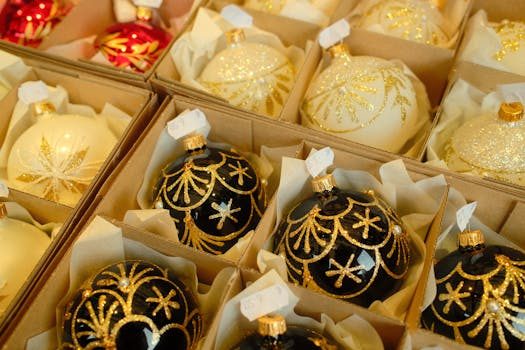
German ornaments from the 1800s are primarily hand-blown glass, often with silvered interiors and hand-painted details. They are fragile, expensive, and require careful handling. In contrast, Soviet-era ornaments from the mid-20th century used pressed glass, painted metal, and even cardboard. They were mass-produced for a socialist economy, so they are more abundant and affordable, but condition can vary wildly. Polish wycinanki ornaments are made from layered paper cutouts, a folk art tradition that predates glass production. They are delicate but light, and they do not break like glass, which makes them easier to ship and store.
If you are budget-conscious, Mexican glass ornaments or contemporary Czech blown pieces offer a good entry point. Both are well-made but not yet commanding the premium prices of antique German or rare Japanese Showa-era items. If you are looking for investment-grade pieces, focus on German Kugels, early Dresden embossed cardboard ornaments, and signed pieces from known Czech or Italian glass studios. Each regional category has a different price floor, condition requirement, and availability window. Your goals should drive your focus.
The Core Categories of Collectible Christmas Ornaments Worldwide
Breaking the world of collectible ornaments into manageable categories is the first step toward building a focused collection. Here are the major groups, with what you need to know about each.
German Blown Glass
The granddaddy of all Christmas ornament collecting. These date mostly from 1840 to 1910, with some later production. Typical pieces are hand-blown, thin-walled, and often silvered inside. Look for Kugels (round balls), figural shapes (apples, pears, fruits), and angels. Maker marks are rare, but known brands like Lauscha are noted in reference books. Price range: $20 for damaged common pieces to $500+ for mint figural angels. Demand is very high, especially for pre-1900 pieces.
Polish Wood and Paper
Polish wycinanki ornaments are cut from paper, often layered and glued without glass. They are light, colorful, and depict folk motifs like stars and roosters. Dates range from early 20th century to present day. Contemporary pieces are still made by hand. Price range: $10 to $100 depending on age and complexity. Collector demand is moderate but growing among those focused on folk art.
Japanese Showa-Era (1950s-70s)
Post-war Japan produced massive quantities of plastic and resin ornaments, often depicting Santa, elves, and animals. They were sold as inexpensive novelties. Condition is critical, as painted faces flake easily. Look for vivid colors and clean molds. Price range: $5 to $40 for most pieces, with rare Disney or unusual figures going higher. Demand is strong among mid-century modern collectors.
Soviet and Czech Glass Figurines
These are pressed or blown glass ornaments from the 1950s to 1980s. Czech pieces are known for intricate beadwork and hand-painted details. Soviets made simpler, sturdier shapes in pastels. Maker marks are somewhat common on Czech pieces. Price range: $10 to $100. Demand is steady, especially for Christmas tree pick sets from Czechoslovakia.
US Hallmark Keepsake
Started in 1973, Hallmark Keepsakes are some of the most collected ornaments in America. They are mass-produced but have a strong secondary market for limited editions and specific series. Dates, series names, and numbers are printed on the box. Price range: $5 to $50 for common, $100+ for rare early pieces. Demand is very high among dedicated collectors, but appreciation is slow for common releases.
Scandinavian Straw and Liturgical Wood
Traditional Scandinavian ornaments are made from straw, wood, or tin. They often have a distinctly rustic, religious feel. Dates span the 19th century to present. Prices vary widely: $15 for a straw ornament to $200 for antique carved wood. Demand is moderate, with a niche following among heritage collectors.
Italian Artistic Glass (Murano/Venetian)
Murano and Venetian glass ornaments are highly decorative, often featuring gold leaf, millefiori, or elaborate lampwork. They date from the mid-20th century onward. Maker marks are common. Price range: $50 to $500+. Demand is strong, particularly for signed pieces. These are more of an art piece than a Christmas novelty.
How to Authenticate and Date Older Ornaments
Authenticating an ornament is part science, part experience. First, check the manufacturing method. Hand-blown glass will have a pontil mark at the bottom where the rod was attached. There will be no mold seam. Mold seams indicate machine pressing, which started around the 1900s for German Kugels and became standard for mass-produced pieces later. A seam is not a dealbreaker, but it often puts the piece after 1910.
The metal cap and hook can tell you a lot. Early German Kugels used a simple twisted wire loop inserted into a cardboard collar. Later caps are stamped metal, sometimes with a small ring. If you see a plastic cap, the ornament is likely 1960s or later. Patina on metal is good. Bright, shiny metal on an old piece is suspicious.
Paint is another clue. Hand-painted ornaments show brush strokes, uneven edges, and variation between colors. Sprayed or stenciled paint is even and crisp, typical of post-1930s production. Check the inside of the glass for silver residue. Real silvered interiors will tarnish. Modern pieces use a chemical silvering that stays brighter and more uniform.
Maker marks are rare on German glass. Some Lauscha pieces have a small paper label or a faint mark on the cap. Dresden ornaments often have a tiny stamp on the cardboard. Czech and Polish pieces are more likely to have a mark. Use a UV light in a dark room. Modern resin or replacement fills will glow under UV, while original glass will not. If you are unsure, take a photo and compare it to known examples in collector reference books before buying. Never assume an unmarked piece is old.
Where to Find Collectible Ornaments: Markets, eBay, and Specialty Shows
You can find collectible ornaments in three primary channels: physical markets, online marketplaces, and specialty shows. Each has advantages and disadvantages.
Physical Markets (Flea Markets, Antique Malls, Estate Sales)
You can handle the ornament, check for damage, and inspect the cap and paint up close. The downside is limited selection. You might visit five antique malls and find nothing. Estate sales can be a goldmine if the previous owner was a collector. Prices are often lower than online, especially at flea markets where the seller does not specialize. Wear gloves to avoid fingerprints on glass. Always carry a small flashlight for inspection.
Online Marketplaces (eBay, Etsy, Ruby Lane, LiveAuctioneers)
eBay is the single largest source. Use search strings like ‘vintage German glass ornament Kugel’ or ‘Shiny Brite figural.’ Save common misspellings like ‘Kugle’ or ‘ornament’ as search terms. Always check the seller’s feedback and whether they disclose damage. Look for photos from multiple angles, especially of the cap and interior. Be wary of stock photos. They suggest the seller is not showing you the actual item. Etsy is good for handcrafted and folk pieces. Ruby Lane has higher prices but more vetted quality. LiveAuctioneers lets you bid in real online auctions for higher-end pieces. The risk online is misrepresentation: a piece described as ‘vintage’ might be modern. Stick with sellers who specify the age and provide condition details. For those who prefer to buy new pieces to start a collection, a set of handmade ornaments can be a simple way to begin without the authentication concerns of antiques.
Specialty Shows (Old World Christmas, Nuremberg Christkindlesmarkt)
Specialty Christmas fairs attract serious dealers. The Old World Christmas show in Las Vegas is huge. The Nuremberg Christkindlesmarkt in Germany has vendors from all over Europe. These shows are worth traveling to if you are serious, but they are seasonal. Tickets and travel costs apply. The selection is outstanding, and you can negotiate. Bring cash and a checklist of what you want. Most dealers are knowledgeable and happy to talk craft history.
Valuation Guide: What Your Ornaments Are Actually Worth
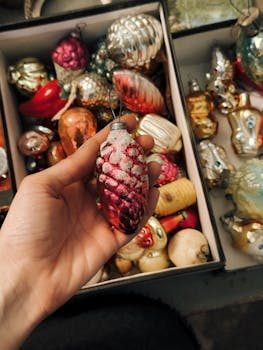
Value is determined by rarity, condition, maker, age, demand, and completeness. It is not how much you love it. Condition is the single biggest factor. A mint 1910s German Kugel with intact silvering and original cap is worth $150 to $200. The same piece with a crack, flaking paint, or a replaced cap drops to $25. Original boxes matter. A Hallmark Keepsake in its original box is worth more than one without. A piece with a factory error or short production run can command a premium.
Here are real-world price examples based on recent eBay sold listings:
- 1910s German hand-blown Kugel, silvered interior, minor tarnish: $50 to $200
- 1950s Japanese plastic snowman, 3 inches, good paint: $10 to $30
- 1985 Hallmark Star Trek ornament, box included: $5 to $15
- Czech blown glass owl, 1950s, hand-painted: $20 to $80
- Polish wycinanki star, early 1900s, paper: $40 to $100
To check market value yourself, use eBay’s advanced search. Check the ‘sold items’ box and search your specific ornament. Ignore the asking prices and look at what actually sold. The ‘completed items’ feature shows unsold ones too, which tells you what can’t move. Price guides exist but be cautious. They are snapshots, not guarantees. The Golden Glow of Christmas Past publishes a well-regarded guide for German ornaments. For Hallmark, there is an annual price guide. Do not overvalue sentiment. Just because your grandmother owned it does not make it worth hundreds. Be honest about condition and market demand.
Common Mistakes Beginners Make When Collecting Ornaments
Most errors come from enthusiasm outpacing education. The first mistake is buying damaged pieces expecting easy repair. Glass cracks cannot be fixed. Flaking paint can only be slowed, not restored. Rust on metal caps spreads. Do not pay more than 20 percent of mint value for a damaged piece unless you are buying a lot for a specific research purpose.
Second is overpaying for common items. A 1978 Hallmark Santa is not rare. Someone owning one might think it is, but a quick search shows dozens for under $10. Always check sold prices before paying. Third is ignoring storage. Ornaments need stable humidity and temperature. Attics freeze, basements are damp. Both destroy paint and cause rust. Fourth is focusing only on one region. You can learn faster and find better deals if you branch out. A German collector might find a great Czech piece at a low price because the seller is region-focused.
Fifth is failing to check for modern reproductions. I once bought a lot of supposed 1890s German ornaments that turned out to be 1970s Polish craft. The glass was too thick, the paint too uniform. A quick UV test would have caught it. A UV flashlight for antiques is worth considering if you plan to buy regularly, as it helps spot modern materials quickly. Finally, failing to document provenance. Write down where and when you bought each piece, what you paid, and any known history. If you ever sell, this adds value. Keep a simple spreadsheet or a notebook. Your future self will thank you.
Preservation and Storage: Protecting Your Collection Year-Round
Storage is not optional. It is how your collection retains value. The enemy is temperature swing, humidity, light, and physical impact. Glass pieces should be stored in compartmentalized ornament boxes. Do not stack them. Use acid-free tissue paper to wrap each piece individually. Never use newspaper. The ink transfers and the paper is acidic. Wood ornaments need to be stored in a stable environment. Too much humidity warps wood, too little cracks it. Paper ornaments should be kept flat between sheets of archival paper in a box with silica gel packs to control moisture.
Silica gel packs are useful for any storage container in a non-climate-controlled space. They absorb moisture and prevent mold and rust. Store the containers in a room that stays between 50 and 70 degrees Fahrenheit. Avoid attics and basements. UV light is destructive, especially for painted pieces. Display them during the holiday season but keep them out of direct sunlight. UV-protective glass on display cases helps but does not eliminate the need for good storage during the off-season. A Christmas ornament storage box with dividers can be a practical investment for keeping your collection safe year-round.
Every year, before hanging your ornaments, inspect each one. Look for signs of rust, paint loss, or cracks. Replace damaged hanging wires. This is the one time you will handle every piece, so make it count. Keep a small notebook and note any new damage. A consistent annual inspection prevents small issues from becoming big losses. Do not skip it.
Special Focus: Collecting Modern Limited-Edition Ornaments for Value
Modern limited-edition ornaments, especially those from Hallmark Keepsake, Old World Christmas, Radko, and Bronner’s, can hold and sometimes increase in value. The trick is knowing what to buy. Hallmark releases dozens of ornaments every year, but only a few are true limited editions. Look for pieces with a specific series run, a numbered piece out of a known total, and a certificate of authenticity (COA). A COA is required for a piece to have any resale premium. Without it, it is just a pretty mass-produced object.
The best investments are series openers, meaning the first year of a new series. They have a limited production run and are in demand from collectors who want to complete the set. Avoid overproduced themes. A generic Santa from Hallmark will never be rare. Focus on licensed properties with strong fan bases: Disney, Star Wars, Marvel. Those hold value better because the buyer pool is larger.
The tradeoff is that modern ornaments appreciate slowly compared to antiques. You might hold a piece for five years before it breaks even after inflation and eBay fees. But the entry price is low, usually under $30, and the risk is minimal if you buy wisely. For investors, buy series openers from the current season and store them in their original boxes. For flippers, buy on clearance after Christmas and sell the following October on eBay. That short window captures seasonal demand at a premium.
How to Build Thematic Collections for Display and Resale
A thematic collection is easier to research, display, and sell than a random assortment. The theme provides focus and creates a narrative that appeals to sub-niches. An angel-themed collection, for example, can include German glass angels, Polish paper angels, Italian resin angels, and Soviet wood carvings. Buyers looking for angel ornaments specifically often pay a premium for a complete themed set.
Start with a theme that has broad supply. Angels are easy to find across regions and price points. Snowflakes are another strong entry point, with clean shapes that are well-suited to Czechoslovakian pressed glass. Santas, while popular, are more regionally specific. German Santas are different from Japanese or American ones, which can make the collection harder to curate. That said, a Santa collection from multiple countries is highly attractive to buyers.
Harder themes include articulated tin figures, glass musical instruments, or Nuremberg-style embossed tin ornaments. These are rarer and more expensive, but they appeal to serious collectors. If you are a beginner, start with a broad theme and narrow as you gain experience. Document your collection with photos, notes on each piece, and a rough valuation. A well-documented themed collection is always easier to sell than a jumble of unrelated ornaments.
Selling Ornaments: Auctions, Online Marketplaces, and Fairs
Selling is a skill separate from collecting. The most profitable sellers know their platform, their audience, and their timing. eBay is the largest marketplace, but it charges fees that can eat into profit. Listings with clear photos, honest condition descriptions, and competitive pricing sell fastest. Use a white background and a macro lens. Show the cap, the interior, and any flaws. Do not hide damage. It leads to returns and negative feedback. Timing matters. List in late August or early September. That is when collectors start preparing for the season. Avoid listing in January or February, when interest is lowest.
Etsy is better for niche, thematic, or handmade pieces. The buyer base is willing to pay more for something unique, but the volume is smaller. Auction houses like Heritage Auctions handle high-end individual pieces or entire collections. They take a percentage but handle photography, description, and promotion. This is the right choice for pieces valued at over $500 individually. For a collection, the auction house will sell it as a lot, which is easier but often yields a lower total return than selling piece by piece. Local antique fairs are cash-and-carry. You set up a table, price your pieces, and negotiate. Fees are usually a flat table cost, so you keep all profit. The audience is older and more cash-rich than online buyers, so condition matters less if the price is right.
Before you list anything, clean it. Use a soft, dry cloth for glass. Do not use water or cleaners. For wood, a dry brush. Photograph it in natural daylight with a plain background. Research sold prices for similar items to set a realistic starting price. Offer combined shipping to encourage multiple purchases. Use a checklist: clean, photograph, research, set price, write description, pack safely, ship insured.
Resources and Communities for Serious Collectors
The fastest way to learn is from people who have already made the mistakes. The Ornament Collectors Club, also known as Golden Glow of Christmas Past, is the largest organization dedicated to Christmas ornament collecting. They publish a quarterly journal, host annual conventions, and have regional chapters. Membership is worth the yearly fee, especially if you are just starting. The journal alone contains price guides, authentication tips, and market reports that you cannot find online easily.
Facebook groups devoted to specific categories or regions are excellent for real-time advice and quick sales. Search for ‘German Kugel collectors’ or ‘Hallmark Keepsake trading.’ Be careful with Facebook groups. Some are full of overpriced listings from sellers who do not know what they have. Use the groups for advice first, buying second. Yahoo Groups still host some older collector communities, but activity is lower than Facebook.
Price guide books remain essential. Look for ‘Ornament Collector’s Guide to…’ series for your area of interest. For German glass, the ‘Golden Glow’ book is the standard. For Hallmark, the ‘Collector’s Guide to Hallmark Keepsake Ornaments’ is updated annually. Museums worth visiting include the Museum of Christmas in Norwich, England, and the Weihnachtsmuseum in Dresden, Germany. Both have extensive collections and changing exhibitions that inform current market trends.
Final Practical Checklist for Starters
If you are new, here is a repeatable workflow to get you started on the right foot:
- Pick one manageable region or category to start with. German blown glass is the classic entry point. Polish paper is cheaper to learn on.
- Buy a reference book specific to that category before you spend any real money. A $30 book will save you hundreds in bad purchases.
- Inspect every piece for damage before you buy. Use a UV light. Check for rust, cracks, and paint loss.
- Use proper storage from day one. Buy a compartmentalized box and acid-free tissue paper. Do not wait until next year.
- Join a collectors’ group. Even one year of membership to Golden Glow will accelerate your education more than any book.
- Document everything. Take photos, keep receipts, note purchase dates and prices. A simple spreadsheet is enough. This will save you when you sell or when you need to remember what you bought.
Start small, focus on condition over quantity, and always learn from the community. The industry knowledge pays off faster than buying blindly. A beginner ornament storage starter kit with a compartmentalized box, acid-free tissue, and silica gel packs is a good first investment. It will protect whatever you start buying.