How to Price Collectibles for Resale Profit
You’ve got a collectionâvintage comics, sports cards, action figures, or antique glasswareâand you’re ready to cash it in. The difference between a profitable sale and a disappointment? It almost always comes down to pricing. Guess too high and your items sit. Guess too low, and you’re leaving money on the table for someone else to grab.
This guide is for collectors, resellers, and estate sellers who want a repeatable system to price collectibles resale with confidence. We’re not talking about hoping for the best or relying on gimmicky “rare finds” pricing. This is about building a practical, data-backed workflow that puts more profit in your pocket and moves inventory faster. Let’s start with the biggest mistake most sellers make.
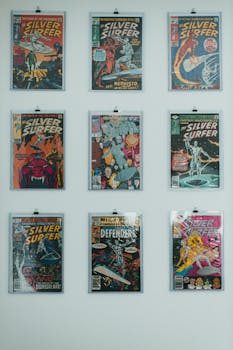
Why Getting the Price Right Matters More Than You Think
Accurate pricing isn’t just about making a sale. It’s about maximizing your overall return and managing your time. Overprice an item, and you tie up your capital in dead inventory that could be working elsewhere. That vintage comic book sitting at $200 for six months isn’t just unsoldâit’s kept you from buying and flipping five other items in the same period. That’s an opportunity cost you can’t ignore.
Underpricing kills your margins even faster. Selling a rare misprint for $15 because you didn’t spend ten minutes checking recent sales is a mistake that stings. The goal isn’t to sell fast; it’s to sell at the maximum price the market will bear within a reasonable timeframe.
This isn’t about intuition or luck. It’s a systematic process. Every successful reseller I know treats pricing as a research task, not a creative one. Over the next sections, we’ll break down exactly how to do that, so you can price with authority and walk away from every sale knowing you got the right number.
The Three Pillars of Collectible Valuation: Condition, Rarity, and Demand
Before you even open a sold listings page, you need to assess your item against three foundational factors. Everything else flows from these.
Condition
This is the single biggest value driver for almost any collectible. A mint-condition comic (say, a CGC 9.8) can sell for ten times what a well-read, low-grade copy goes for. Same for trading cards, action figures in unopened boxes, or vintage vinyl records.
You need to be brutally honest here. Check for creases, scratches, fading, missing parts, writing, or any wear. For graded items (coins, cards, comics), understand the grading scale intimately. A slight drop from a 9 to an 8 on a PSA or BGS scale can mean hundreds of dollars difference. If you’re not sure, grade conservatively. It’s better to pleasantly surprise a buyer than misrepresent and deal with a return. A well-made magnifying loupe can help you spot condition issues you might miss with the naked eye.
Rarity
Rarity isn’t just “how many were made.” It’s about scarcity in the current market. A common baseball card from 1987 might have been printed by the millions, making it worthless despite being “old.” A limited-edition Star Wars figure from a specific convention run could be genuinely rare. Look for:
- Limited production runs (e.g., 10,000 copies)
- Short-print or error variants
- Items from short-lived series or brands
- Regional or promotional exclusives
A rare item with no demand is a trap. Rarity only boosts value when paired with the next pillar.
Demand
Demand is the fuel for your price. A common item (high production) can still command a high price if enough people want it right now. Think of a hot new Pokémon card from a recent set versus a niche error coin from the 1800s that only 50 people care about.
You can gauge demand by checking how often an item is being searched (use Google Trends or eBay search data) and how many active watchers similar listings have. High demand with limited supply is your sweet spot. High demand with tons of available copies means price competition is fierce. You need all three pillars pointing in the same direction to price aggressively.
How to Research Recent Sold Prices Like a Pro
Once you’ve assessed your item’s condition, rarity, and demand, you need hard data. The most reliable source is completed or sold listings on major auction and marketplace sites. Here’s a step-by-step method you can follow every time.

The eBay Sold Listings Method
This is your gold standard. On eBay, after your search results load, use the filter to select “Sold Items” and “Completed Items.” Active listings are irrelevantâthey only tell you what people are *asking*, not what they’re *paying*.
Look for 5 to 10 sold listings that closely match your item’s condition. Note the sale date, the final price, and any key details (like a specific grade or variant). Average these prices, but give more weight to the most recent sales (last 30 days). If you see one outlier at a very high price, investigate if it was a particularly pristine copy or if it was a “Buy It Now” vs. auction sale.
Beyond eBay: Specialized Sites
For certain niches, eBay isn’t the best source. Try these:
- Comics: MyComicShop.com or GoCollect for graded sales data
- Trading Cards: Cardboard Connection or 130point.com (which shows eBay best offers, not just sale prices)
- Coins: Heritage Auctions or PCGS CoinFacts
- Toys & Action Figures: Action Figure Insider or ToyNewsI
The key mistake beginners make is using active list prices as a proxy for value. Don’t do it. Sold data is the only truth. Also, be aware of “sold” items that might be returns or cancelledâcheck the price is realistic.
The Role of Seasonality and Market Trends in Pricing
Collectible demand isn’t static. Pricing without considering timing is like setting a Christmas ornament price in July and wondering why no one bites.
Certain categories spike predictably:
- Sports memorabilia: During the playoffs or after a player’s retirement. A Patrick Mahomes card sells for more during the Super Bowl run than in the off-season.
- Holiday items: Think Coca-Cola Santa figurines in November or Halloween costumes in September.
- Movie/TV anniversaries: A Star Wars prop replica might spike around the anniversary of a film’s release.
- Cultural moments: A niche character can suddenly surge due to a new Netflix series or viral meme.
You can use Google Trends to compare search volume over time. If an item has a consistent seasonal peak, plan your listing to hit that window. But be careful about trends. A fad (like a specific TikTok toy) is a short-term spike that can vanish in weeks. A genuine trend (like vintage video game interest) has staying power. For fads, price aggressively and sell fast. For trends, you can be more patient.
Check historical price charts on dedicated sites to see if the current price is a peak or a trough. You don’t want to buy into a peak and get stuck holding a falling knife.
Common Pricing Mistakes That Kill Your Profit (and How to Avoid Them)
Even experienced resellers fall into these traps. Here’s what to watch out for.
1. Pricing Based on Emotional Attachment
This is the #1 killer. You’ve had that comic since you were ten. It feels “important.” But the market doesn’t care about your memories. Detach yourself and use the data. If recent sales say $30, price it at $30. Your nostalgia isn’t a value-add.
2. Ignoring Condition Flaws
You may not notice a small crease or a faded label because you’re used to seeing it. But a buyer will see it immediately. And worse, if you don’t mention it, you’ll get a return and a negative review. Be meticulous about cataloging every flaw, and price down accordingly. Use strong, well-lit photosâthe truth sells better than deception.
3. Relying on Outdated Price Guides
A price guide from 2015 is worse than useless. It’s misleading. Market conditions change fast. A once-hot item can crash, and a sleeper can spike. Always use current, sold data, ideally within the last 60 days.
4. Forgetting Fees and Shipping
If you’re selling on eBay, your effective fee is around 15% (or more with promoted listings). Factor that into your list price. A $100 sale is only $85 after fees, then subtract shipping, packaging, and any transaction costs. Price with these in mind so you don’t end up working for free. A reliable digital shipping scale helps you accurately calculate shipping costs before you set a price.
5. Not Checking Multiple Platforms
Just because one site shows a low price doesn’t mean that’s the market. A rare trading card might be undervalued on eBay but sell well on a dedicated forum or a Facebook group. Always cross-reference 2â3 sources before setting your final number.
Setting a Price for Different Selling Platforms: eBay, Etsy, Facebook, and More
Your strategy should adapt to where you’re selling. A one-size-fits-all approach leaves money on the table.
eBay
eBay is the most competitive marketplace. Buyers expect competitive pricing. For auctions, start low (often $0.99) to generate interest, but understand the risk of selling for less than you want. For Buy It Now, price based on sold data minus a small buffer for negotiation. You’re competing with thousands of sellers, so price transparency is key. Factor in the 15% fee when setting your floor.
Etsy
Etsy sells on a curated, vintage, and handmade aesthetic. Buyers here often pay a premium for uniqueness and good presentation. If your collectible is fairly niche or visually appealing, list it higher on Etsy than on eBay. Good photography and a compelling backstory can command an extra 20â30% over eBay pricing, especially for items with emotional appeal like vintage toys or decor.
Facebook Marketplace and OfferUp
These are local, lower-hassle platforms. Buyers expect a deal. Price lower than eBay, but account for zero selling fees. Usually, you can offer 10â20% below eBay’s sold price and still come out ahead. The trade-off is no shipping hassle, but you’ll need to deal with local buyers and potential flakes.
Dedicated Forums or Facebook Groups
In a niche community (e.g., a vintage Lego trading group), pricing can be higher or lower than eBay depending on scarcity. Often, these buyers are more knowledgeable and appreciate a fair price. Price at or slightly below recent eBay solds to move quickly. The trust factor here can reduce negotiation friction.
Rule of thumb: For multi-channel selling, start slightly higher than your target price. You can always lower it, but you can’t raise it after a sale. Adjust for fees and platform expectations.
How to Price Bulk Lots vs. Individual Items
If you have a large collection, you face a strategic choice: sell individually or batch into lots. Each has a clear pricing logic.
Individual Items: This is where you make the most money on your high-value pieces. Spend the time to clean, grade, photograph, and price each one carefully. For rare items or those in high demand, the extra effort pays off. Pair this with a strategy of selling the rest of the collection as a lot to clear volume.
Bulk Lots: Lots are for volume, not maximum profit. You’re trading margin for speed. The standard discount is 30% to 50% off the total individual value. If the 100 items in the lot would sell for $1,000 individually (after fees), a fair lot price is $500 to $700. The larger the lot, the bigger the discount buyers expect.
Be honest about the lot contents. If it’s a mix of junk and gems, don’t hide the junk. Price accordingly. A well-organized lot with clear photos of everything will sell faster than a mystery box. For mixed lots, you might go even lowerâsometimes 60% offâto move dead inventory.

Tools and Resources to Simplify Your Pricing Workflow
Pricing doesn’t have to be a manual slog. The right tools save hours and improve your accuracy.
- Price Guide Subscriptions: Services like WorthPoint or Kovels are excellent for antique and vintage items. They aggregate sold data from multiple sources and save you from endless eBay scrolling. WorthPoint, for instance, offers a monthly plan that’s worth it if you price more than 50 items a month.
- Barcode Scanners: For books, records, or any barcoded collectible, a simple barcode scanner (like a Bluetooth one around $30) paired with a pricing app (like Scoutify or Profit Bandit) lets you scan quickly in a thrift store or garage sale. The setup cost pays for itself quickly. If you’re scanning regularly, a Bluetooth barcode scanner is worth considering.
- Shipping Scale: You can’t price accurately if you don’t know your shipping costs. A good digital scale (under $20) is essential. Weigh your item plus packaging, and use your platform’s shipping calculator before you set your price.
- Sales Tracking Software: Tools like QuickBooks Self-Employed or even a simple spreadsheet are non-negotiable. Track your cost basis, sold price, fees, and shipping for each item. Over time, this data tells you exactly which categories and pricing strategies work best for you.
Check current pricing on Amazon for a reliable barcode scanner or a high-quality digital scale. These are small investments that pay huge dividends in accuracy and saved time.
The Art of the Negotiation: Building Room in Your Price
Unless you’re listing with a strict “no offers” policy, expect to negotiate. The key is to set your list price with built-in room to move, without sacrificing your profit floor.
Use this formula: List Price = (Desired Profit + Fees) / (1 – Expected Discount %).
For example, you want $50 profit on a comic. Fees are $10. You expect buyers to ask for 10% off. Your list price is ($60) / (0.9) = ~$67. You list at $70, let them offer $60, counter at $63, and you land at your $50 profit. That’s a win for both sides.
Psychological pricing works. $49.99 feels significantly cheaper than $50. $99 feels like a bargain compared to $100. Use it strategically.
When you get a lowball offer, don’t get offended. A simple counteroffer or a polite “I’m currently firm on that price due to recent sales data” shows you know your business. If the offer is absurdly low (like 20% of your price), you can just ignore it or respond with your best number. You don’t have to sell to every person.
Final Checklist: Your Step-by-Step Pricing Routine
Before you hit “list,” run through this checklist. It will ensure you forget nothing.
- Assess Condition: Grade honestly. Note every flaw.
- Verify Rarity: Check production numbers and any known variants.
- Gauge Demand: Look at eBay watchers and Google Trends for your item.
- Research Recent Sales: Check 5-10 sold items on eBay and niche sites.
- Factor in Seasonality: Is it the right time of year or trend cycle?
- Choose Platform: Match platform to item (eBay for volume, Etsy for premium, Facebook for local).
- Set Your Base Price: Use sold data as your anchor.
- Add Fees & Shipping: Calculate your effective take-home.
- Build Negotiation Buffer: Apply the formula to protect your floor.
- List with Strong Photos: Include a clear shot of any flaws.
FAQs About Pricing Collectibles for Resale
How do I price items with no recent sales?
This is tricky but common. First, try to find similar items from the same era or category. If that fails, look at completed listings from the last year. If nothing exists, price conservativelyâmaybe 20% below what you *think* it might sell for. List it and see if it gets watchers. If it doesn’t sell in 30 days, drop the price by 10% and repeat.
Should I price higher or lower on eBay?
Start with a competitive but fair price based on sold data. If you want to move fast, price 10â15% below the average sold price. If you have a rare item and patience, price at the high end of the range. For auctions, a low starting price (like $0.99) can generate bidding wars.
What if an item has damage?
Be transparent. Price it as “for parts/repair” or “fair condition.” Expect 50â70% off the price of a mint copy. A damaged item that’s rare can still sell, but the buyer is accepting a compromise. Don’t hide the damageâit only leads to returns and bad feedback.
How fast should I reduce the price if it doesn’t sell?
Give it at least 30 days. If no watchers and no offers, drop by 10-15%. If there are watchers but no sales, the price is likely too high for their comfort. Drop it by 5-10%. After 60 days with no movement, consider a bulk lot or a steep discount to clear it.
Start Pricing Smarter Today
Pricing is a learnable skill. It’s not a mystery. It’s about being systematic, using data, and avoiding the emotional traps that kill profit. The second you start applying even one technique from this articleâlike using eBay sold listings instead of guessworkâyou will see a difference in your margins and your mental peace.
So take the checklist. Set your pricing routine. And remember: every well-priced item is a small victory for your business. Ready to put these strategies to work? Quality grading supplies can help you present items accurately and justify your price.