Why Fakes Are More Common Than You Think
If you’re reading this, you probably already know that counterfeit Pokémon cards aren’t just a problem for vintage collectors. The issue is widespread and getting worse. Fakes exist across every era of the game, from Base Set holographics all the way up to modern alt arts and Trainer Gallery cards. Some are laughably badâwrong colors, blurry text, a gloss that feels like a sticker. But others are genuinely deceptive. There are counterfeiters now producing weight-matched proxies with passable texture and foil patterns that can fool even experienced collectors at a quick glance.
The stakes are real. If you buy a fake for even $50, that’s money you won’t get back easily. If you trade one into your collection, it devalues everything around it. And if you try to sell later, a fake can damage your reputation. The most commonly faked sets include Base Set, Neo, Team Rocket, and modern alt-art chase cards like those in Evolving Skies or Fusion Strike. Understanding how the counterfeit industry operatesâand the specific techniques they useâmakes you far less likely to become a victim. That’s what this guide is for.
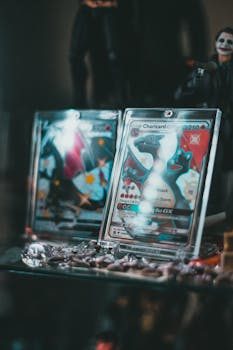
The Quick Physical Checks: Weight, Texture, and Feel
Before you bring out any tools, there are three physical checks that take about ten seconds each. They aren’t foolproof, but they filter out the vast majority of obvious fakes. Start with weight. An authentic modern Pokémon card typically weighs around 1.7 grams. Vintage cards are slightly differentâBase Set cards often come in around 1.75 to 1.8 gramsâbut the point is consistency. A counterfeit card made with cheaper paper stock will often be noticeably lighter or heavier. For collectors who want precision, a small digital scale is a helpful tool for this kind of check.
Next, feel the card’s texture. Authentic cards have a specific matte finish that’s slightly rough to the touch, almost like very fine grit. Fakes, especially cheap ones, are often glossy or slick, as if coated in a thin plastic layer. Some fakes try to mimic the matte finish but end up feeling too abrasive or rubbery. Finally, test the bend resistance. A real card has a specific flexâit bends with a certain tension and springs back without creasing easily. Fakes are often flimsy and floppy or unnaturally stiff. If a card feels wrong in your hand, it probably is.
How to Inspect the Holo Pattern and Foil
The holographic pattern is one of the hardest things for counterfeiters to replicate convincingly. On authentic holos, the rainbow sheen shifts smoothly as you tilt the card under light. It’s not a static rainbow sticker slapped over the artworkâit’s a layered foil that interacts with the card’s print. On a real Base Set holographic, the foil has a galactic-like pattern that moves organically. On modern VMAX and VSTAR holos, the foil has a distinct diagonal or circular sheen that’s almost impossible to fake exactly.
Fakes often get this wrong in one of two ways. The most common is a flat, sticker-like rainbow layer that doesn’t move or shifts in an unnatural way. You might also see a repetitive star pattern or a grid-like texture across the entire card. Another tell is the foil layer itself. On authentic cards, you can sometimes see a subtle grid or weave pattern under magnification, especially on older WOTC-era holos. Fakes tend to have a smooth, plastic-looking foil surface with no depth. If the holo looks like a printed sticker rather than an embedded foil, walk away.
Font, Spacing, and Common Print Flaws
The text on a Pokémon card is surprisingly consistent across every authentic print run. Counterfeiters often trip up here because they’re copying the artwork, not the typography. Start by looking at the HP value on modern cards. On authentic cards, the font is clean, sharp, and evenly spaced. Fakes frequently have a thicker or thinner HP font, or the number sits slightly off-center. The same goes for the card’s nameâfakes often use a slightly bolder or italicized version of the correct font.
Check the set symbol and the copyright line at the bottom of the card. The set symbol should be crisp and perfectly centered. If it’s misaligned, blurry, or looks like a photocopy, that’s a red flag. The copyright lineâusually something like “©2023 Pokémon/Nintendo”âshould be sharp and readable at a glance. Fakes often have this line smudged or missing entirely. Also look for common typos. Some fakes will spell “Pokémon” as “Pokemon” without the accent, or swap the energy symbol colors. These are dead giveaways that the card is counterfeit.
The Light Test: A Simple Way to Check Card Layers
The light test is one of the most reliable quick checks you can do, especially for vintage cards. Hold the card up to a bright light sourceâa phone flashlight works perfectlyâand look through the card from the back. An authentic Pokémon card has a specific internal layer structure. The middle layer has a dark, fibrous core that allows a thin blue or green glow to pass through when held up to strong light. You should see a faint, consistent glow across the entire card, not just in one spot.
Fakes typically fail this test in one of two extremes. Some cheap fakes block all light, showing only a solid white or black shadow. Others let too much light through, creating a bright white glow that’s uniform across the entire card. If the card is completely opaque or glows white instead of blue/green, it’s almost certainly fake. A quick warning: this test works best on vintage cards from the WOTC era. Modern cards, especially those with thicker foil layers or full-art treatments, can vary slightly. If you’re testing a modern card and it passes the light test, that’s a good sign, but don’t rely on it exclusively.
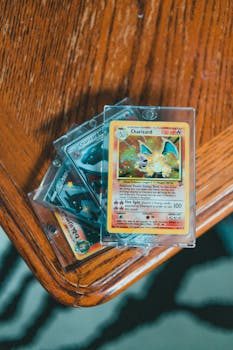
Using a Magnifier or Loupe: Checking the Rosette Pattern
If you want to be absolutely sure about a card’s authenticity, a magnifier is your best friend. You don’t need anything fancyâa 60x to 100x jeweler’s loupe costs between $10 and $20 and will pay for itself the first time it saves you from a bad purchase. Collectors who want a reliable option can find affordable jeweler’s loupes that work well for this purpose. The reason this works is that authentic Pokémon cards are printed using a halftone dot pattern called rosettes. Under magnification, you’ll see tiny dots arranged in a specific pattern that creates the card’s colors through optical mixing.
Fakes, especially cheap ones, tend to use a solid ink layer or a simpler dot pattern that’s too uniform or too irregular. Look for a consistent, repeating rosette pattern across the colored areas of the card. If you see solid blocks of ink, large gaps between dots, or a pattern that looks like a photocopy, the card is fake. This method is particularly useful for authenticating modern cards where other physical tests might be less reliable. A loupe is one of those tools that feels unnecessary until you use it once and realize how much it clarifies the entire process.
Authenticating Vintage Cards vs Modern Cards: Key Differences
The approach you take to verifying a card’s authenticity should change depending on whether you’re looking at a vintage Base Set card or a modern VSTAR. Vintage cards, particularly those from the WOTC era (Base Set through Neo), have their own set of common tells. Fakes from this era often get the colors wrongâBase Set Charizard should have a deep orange body, not a washed-out yellow. They also frequently miss the shadow on the right side of the artwork box, a hallmark of the original print. Energy symbols on vintage fakes are often the wrong size or shape, and the card stock tends to be thinner and more flexible than the real thing.
Modern cards, on the other hand, are generally more consistent in their physical properties. The biggest tells for modern fakes are the foil texture, the sharpness of the text, and the overall print quality. Many modern fakes try to replicate the diagonal foil pattern of VMAX cards but end up with a flat, printed look. The texture on authentic modern cardsâespecially on V, VMAX, and VSTAR cardsâis distinct and slightly raised. If a modern card feels completely smooth, it’s likely a fake. Knowing which era your card belongs to helps you focus on the right tells and avoid wasting time on irrelevant checks.
Common Mistakes Collectors Make When Spotting Fakes
One of the most common mistakes is relying solely on the back of the card. Many collectors assume that if the back color matches a known authentic card, the whole card is real. The problem is that counterfeiters have gotten much better at matching the back color, especially on modern fakes. The back alone is no longer a reliable tell. Another mistake is trusting a card just because it came out of a pack. Sealed packs can be tampered with, and there are well-documented cases of resealed packs containing fakes. Always verify the card itself, not just its packaging.
Ignoring weight checks on modern cards is another error. Modern cards are produced with tight tolerances, so a noticeable weight difference is a strong red flag. Some collectors also assume that if a card is graded, it’s automatically authentic. While professional grading is a strong indicator, it’s not infallible. There have been instances of counterfeit cards slipping through, especially with older or less rigorous grading companies. Finally, don’t overlook texture on EX, GX, and VMAX cards. These cards have a distinct texture that’s almost impossible to fake perfectly. If the texture feels wrongâtoo smooth, too rough, or missing entirelyâthat’s a major warning sign.

When to Use Third-Party Authentication Services (PSA, CGC, Beckett)
For high-value cards, the safest route is professional authentication through a reputable grading service. PSA, CGC, and Beckett all offer authentication services, and each has its own strengths. PSA is the industry standard for trading cards, with the widest recognition and highest resale value. CGC is known for its detailed grading reports and consistent standards, while Beckett offers both grading and authentication with a focus on game-used cards. The general rule is that if a card is worth over $100âor if you’re planning to sell it as an investmentâprofessional grading is worth the cost.
Turnaround times vary. Standard services from PSA can take several months, while expedited options cost significantly more. CGC and Beckett are generally faster but still require patience. Expect to pay between $20 and $100 per card depending on the tier and desired turnaround. The peace of mind is worth it for cards that represent a significant financial investment. If you’re buying vintage cards online, especially from auction sites, consider factoring in the cost of grading when you bid. A graded card is not only authenticated but also protected and easier to sell later.
Digital Tools and Resources for Authenticity Checks
There are several online tools that can help you verify a card’s details before you buy. TCGplayer’s price guide is a solid starting pointâcross-check the card’s set number, rarity symbol, and edition against the database. PSA also offers a free verification database where you can look up graded cards by their certification number. If you’re buying on eBay, the platform’s authentication guarantee applies to cards over $250, which adds a layer of protection. For quick opinions from experienced collectors, Reddit’s r/pokemoncardvalue and r/pkmntcgtrades are active communities where you can post photos and get feedback.
A word of caution: apps that scan cards for price listing are useful, but they don’t authenticate. They just match the card’s image to a database entry. A fake that looks like the real card will still show up as authentic in the app. Use these apps for pricing reference, not for authentication. The best approach is to combine digital cross-referencing with physical checks. If a card’s details match the database but it feels wrong in your hand, trust your instincts and run the additional tests.
What to Do If You Bought a Fake Card
Finding out you bought a fake is frustrating, but there are concrete steps you can take. Start by documenting everythingâtake clear photos of the card, the packaging, and the listing or receipt. This evidence is crucial for any claim. Next, contact the seller directly. Many marketplace platforms like eBay, TCGplayer, and Mercari have policies against counterfeit items and will side with buyers if you can prove the card is fake. Be polite but firm, and attach your documentation. Most sellers prefer to resolve this quietly to avoid account penalties.
If the seller doesn’t respond or refuses a refund, escalate the issue. On eBay, open a return case under the “Item not as described” category. On TCGplayer, use their buyer protection system. For purchases made with a credit card, you can file a chargeback with your bank for goods that are counterfeit. This is a last resort, but it’s effective. Finally, leave an honest review warning other collectors. Your experience can save someone else from the same mistake. Taking action when you buy a fake isn’t just about recovering your moneyâit’s about protecting the community.
The Bottom Line: Building a Routine Verification Workflow
If you make verifying authenticity a habit, you’ll spot fakes before they ever enter your collection. Here’s a simple workflow to follow with every new card you acquire: first, weigh it against a known authentic card. Second, feel the texture and check the bend. Third, hold it up to a light for the glow test. Fourth, inspect the holo pattern under a bright light. Fifth, examine the font, spacing, and any typos. Sixth, if you’re still uncertain, grab a loupe and check the print dots. Finally, cross-reference the card’s details online. Using a digital scale for weighing cards can be part of that first step.
This routine takes about a minute once you’re practiced. It’s the single best way to protect your collection and your wallet. Make it your default approach, and you’ll rarely be caught off guard. If this guide helped you, pass it along to another collectorâthe more people who know how to verify authenticity, the harder it gets for counterfeiters to operate.