Introduction
If you’re serious about sports cards collecting, PSA grading isn’t optional â it’s the standard. Whether you just pulled a case hit or inherited a shoebox of 80s cards, understanding how PSA affects value is the difference between getting paid and getting taken. This guide is for new and intermediate collectors who want to know how PSA grading works, what it does to prices, and how to avoid costly mistakes. We’ll cover the scale, the submission process, common pitfalls, and real market data so you can buy and sell with confidence. The goal is simple: help you make smarter decisions around sports cards collecting psa without the fluff.
Why PSA Grading Matters for Sports Cards Collecting
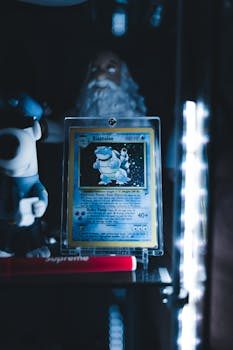
Professional Sports Authenticator (PSA) is the most recognized name in card grading. When a card comes back in a PSA slab, it carries weight. Buyers trust it. Sellers rely on it. The market moves based on it. A raw card might sell for $50, but the same card graded PSA 9 could fetch $200 or more. That’s not hype â that’s liquidity. Graded cards are easier to sell because the condition is verified. There’s no argument about centering or corner wear. The grade is the grade.
Other graders like Beckett (BGS) and SGC have their place, but PSA dominates in resale value and auction demand. For example, a PSA 10 of a modern rookie often commands a premium over a BGS 9.5 or SGC 10. Why? Collector preference. PSA has been around longer and has the largest population of graded cards, which creates a feedback loop of trust. If you plan to flip cards or build a long-term collection, PSA is the benchmark. That doesn’t mean others are bad â it means PSA is the safest bet for maximum value.
Understanding the PSA 1â10 Scale: What Each Grade Means for Value
The PSA scale runs from 1 (Poor) to 10 (Gem Mint). Each step represents a measurable difference in condition, and those differences translate directly into price. Here’s how it breaks down:
- PSA 1â2 (Poor to Fair): Heavy wear, creases, stains, or writing. These are filler cards. They hold minimal value unless it’s a key vintage card like a 1952 Topps Mickey Mantle, where even a PSA 1 can still be worth thousands.
- PSA 3â4 (Very Good to Good): Noticeable wear but the image is intact. For modern cards, these grades are often worth less than raw. For vintage, they’re entry-level collectibles.
- PSA 5â6 (Excellent to Excellent-Mint): Some surface wear, minor corner issues, but presentable. Budget-friendly for vintage collectors.
- PSA 7 (Near Mint): Light wear visible under close inspection. Solid mid-range. A 1989 Ken Griffey Jr. Upper Deck PSA 7 sells for around $30â40 vs. raw at $10.
- PSA 8 (Near Mint-Mint): Very minor flaws. This is the sweet spot for vintage â good condition without the premium. A 1986 Michael Jordan Fleer PSA 8 runs around $4,000â5,000.
- PSA 9 (Mint): Centering and corners must be excellent. This grade commands a serious jump. The same Jordan rookie in PSA 9 can be $15,000â20,000.
- PSA 10 (Gem Mint): Nearly perfect. Only a small percentage of cards achieve this grade. A Jordan Fleer PSA 10? Over $100,000. A 2000 Tom Brady Bowman Chrome PSA 10 is in the $30,000 range. The gap between 9 and 10 is often 5â10x.
The takeaway? A single grade point matters. Don’t assume a card will gem. Be realistic about your cards before you submit, and understand that value jumps are exponential, not linear.
How to Assess a Card Before Submitting to PSA
Wasting money on grading fees is the fastest way to lose on a submission. Before you send anything to PSA, do a thorough self-assessment. Here’s what to check:
- Centering: The image should be evenly balanced within the borders. PSA allows up to 55/45 on the front and 60/40 on the back for a 10. Anything worse drops you to 9 or below. Beginners who plan to grade several cards may find a card centering tool helpful for quick checks.
- Corners: Look for softness, dings, or white showing through. A 10 requires sharp, untouched corners. Use a magnifying loupe (10x is ideal) to examine them closely.
- Surface: Check for scratches, dimples, print lines, or roller marks. Hold the card under a bright light at different angles. Surface flaws are the most common reason modern cards don’t gem.
- Edges: Look for chipping or rough spots. A clean edge feels smooth when you run a fingernail across it.
Also, do the eyeball test. If the card looks off in any way â maybe the colors seem faded or the corners look slightly worn â it’s probably not a 10. Trust your first impression. If you’re unsure, compare it with known PSA 10 images online. Honest self-assessment saves you $20â50 per card in unnecessary grading fees.
PSA Grading Costs and Turnaround Times: What to Expect in 2025
PSA pricing changes, but here’s the general structure as of early 2025:
- Value ($25/card): For cards with a declared value under $500. Turnaround is 45â65 business days. This is the most popular tier for bulk submissions.
- Regular ($40/card): Under $1,500 value. Turnaround 25â40 business days.
- Express ($75/card): Under $5,000 value. Turnaround 10â15 business days.
- Super Express ($150/card): Under $10,000 value. 5 business days.
- Walk-Through ($500/card): Over $10,000 value. 1â2 business days.
You also need to factor in shipping insurance, membership fees (PSA Collectors Club is $69/year and gives you discounts), and return shipping. A single card submission can cost $50â100+ after everything. Bulk submissions through group submitters can lower the per-card cost to $15â20, but turnaround times are longer. Plan ahead and don’t submit cards you’re not confident about.
Common Mistakes When Submitting Sports Cards for PSA Grading
Even experienced collectors mess up. Here are the most frequent errors and how to avoid them:
- Submitting flawed cards: Sending a card with obvious surface scratches or off-center printing hoping PSA misses it. They won’t. Be harsh with your own cards.
- Poor packaging: Cards sliding around in a box or unprotected sleeves cause shipping damage. Use semi-rigid sleeves and cardboard to keep them secure. Those shipping many cards might consider a grading submission shipping kit for extra protection.
- Wrong service level: Choosing Value for a card worth $600 means you’re underinsuring and risking the tier cap. Always match tier to declared value.
- Not cleaning cards: Dust, fingerprints, and particles can cause a lower grade. Use a soft microfiber cloth to gently wipe the surface before submission.
- Ignoring centering: Even a print line can drop a grade. Check centering meticulously â it’s the most common reason modern cards miss 10.
- Not checking pop reports: A card with thousands of PSA 10s already may not hold its premium. Check population reports on the PSA website to see how rare a high grade actually is.
Each mistake costs you time and money. A little prep goes a long way.
How PSA Grades Impact Resale Value: Case Studies and Trends
Let’s look at real numbers. The 1989 Ken Griffey Jr. Upper Deck rookie is a classic example:
- Raw: $10â15
- PSA 8: $25â35
- PSA 9: $100â150
- PSA 10: $800â1,200
That’s a 10x jump from 9 to 10. For modern cards, the spread can be even wider. A 2018 Luka Doncic Prizm base in PSA 10 sells for $300â400, while a PSA 9 might only bring $60â80. Vintage cards behave differently. A 1952 Topps Mickey Mantle PSA 1 is still $30,000+, but a PSA 5 climbs to $200,000. Condition sensitivity varies by era. Modern cards hinge heavily on 10s because supply is abundant. Vintage collectors care more about eye appeal than exact numbers. Understanding these trends helps you buy and sell at the right time.
PSA vs. Other Grading Companies: Which Is Best for Your Collection?
Here’s a straightforward comparison to help you decide:
- PSA: Best for resale value and market liquidity. Preferred by auction houses like Goldin and PWCC. Ideal for flipping and long-term investment. The most trusted name in the hobby.
- Beckett (BGS): Sub-grades (centering, corners, edges, surface) provide more detail. A BGS 10 Black Label is the holy grail but extremely rare. Good for personal collections if you value sub-grades, but resale isn’t as strong as PSA.
- SGC: Fast turnaround and lower fees. Slab design is clean. Strong for vintage cards â many vintage collectors prefer SGC for its consistent grading. Good for personal collections and lower-cost submissions.
Decision matrix: If you want to sell quickly, go PSA. If you want detailed breakdown and don’t mind slightly lower resale, go BGS. If you’re grading vintage or want speed, SGC is a solid alternative. For most collectors, PSA is the default.
Top 10 Sports Cards to Collect and Grade Right Now
These cards have strong potential based on current market trends. Focus on high-grade examples when possible.
- 1952 Topps Mickey Mantle (#311): The king of cards. Even low grades are valuable. PSA 1 is $30k+. Long-term hold.
- 1979 O-Pee-Chee Wayne Gretzky: 9s and 10s are hugely sought. A PSA 9 sells for $15k+.
- 1986 Fleer Michael Jordan (#57): Key modern-era card. Strong demand in all grades. PSA 9 is $15k+.
- 1989 Upper Deck Ken Griffey Jr. (#1): High pop report means 10s are common â but demand remains steady for 9s and 10s.
- 2000 Bowman Chrome Tom Brady (refractor or base): The GOAT of football. PSA 9 base is $2k+, 10 is $30k+.
- 2018 Panini Prizm Luka Doncic (base): Modern basketball with huge growth. PSA 10 is $300â400.
- 2020 Panini Optic Patrick Mahomes (holo): Quarterback premium. PSA 10s hold value well.
- 2019 Topps Chrome Fernando Tatis Jr. (refractor): Defensive star, young talent.
- 1993 SP Derek Jeter (#279): Iconic rookie. PSA 10 commands a premium.
- 1973 Topps Nolan Ryan (#220): Timeless pitcher. High grades are scarce.
Each of these cards has proven demand and solid base value. Check pop reports before buying to avoid overpaying for common grades.
How to Store and Protect Graded Sports Cards Long-Term
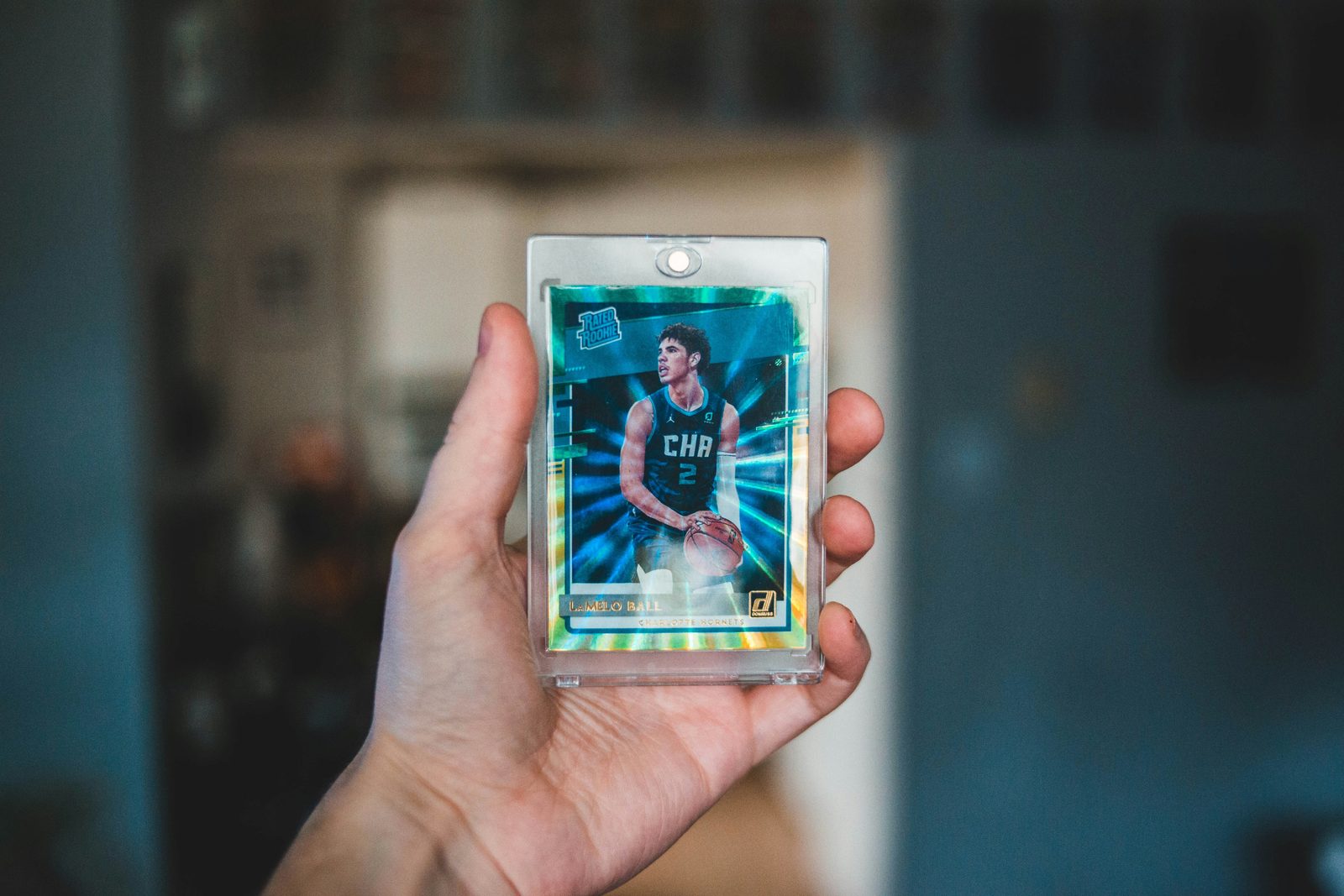
A PSA slab is tough, but it’s not indestructible. Here’s how to keep your collection safe:
- Do this: Store in a cool, dry place. Ideal temperature is 60â70°F with humidity under 50%. Use team bags or slab sleeves to protect from scratches. Store in a sturdy box or display case. Frequent handlers may want a graded card storage box to keep slabs organized.
- Do this: Keep out of direct sunlight. UV exposure can fade labels and damage cards over time.
- Do not: Stack slabs on top of each other without separating them. They can slide or scratch. Use dividers.
- Do not: Store in a garage, attic, or basement prone to temperature swings. Condensation is a real problem.
Recommended gear: semi-rigid holders for raw cards, team bags for slabs, and a small dehumidifier for storage areas. Handling gear like cotton gloves also prevents fingerprints during inspection.
Buying and Selling PSA-Graded Cards: Platforms and Tips
Where you sell matters for pricing and fees:
- eBay: Largest audience. 13.25% final value fee (plus payment processing). Good for liquidation but high competition. Use strong photography and keyword-rich titles. Always include the PSA cert number in the listing.
- Goldin Auctions: Premium marketplace for high-value cards. 8â15% buyer’s premium, lower seller fees. Best for cards over $1,000.
- PWCC Marketplace: Specialized in graded cards. Monthly auctions with strong buyer base.
- MySlabs: A newer platform designed for graded cards only. Lower fees (3% seller fee). Good for serious collectors.
- Local shows: No fees, but you need to know your market. Good for quick cash.
Tips: Price using recent sold comps, not asking prices. Take clear photos of the front and back including the label. List any flaws honestly. Scams exist â always use PayPal Goods and Services or a platform’s buyer protection. For in-person sales, meet in a public place or at a show.
Building a Collection Strategy Around PSA Grading
If you’re thinking long-term, have a plan. Decide on focus: a specific player, team, or set. Specializing builds expertise and makes buying decisions easier. Balance raw and graded cards â raw for flipping, graded for holding. Know when to grade: if you buy a raw card that you believe is a 9 or 10, submit it. If you’re not sure, wait and compare. Budget management matters. If you’re flipping, aim for cards with strong demand and low submission costs. If you’re holding, prioritize iconic rookies and vintage. Don’t chase hype. Grading is a tool, not a goal.
Ready to take the next step? Whether you want a personalized strategy session or need help with your collection, book a consultation on collect-us.com and let’s build a plan that works for you.
Final Tips for Mastering Sports Cards Collecting with PSA
Grade wisely. Research values. Avoid common mistakes. Store properly. The difference between a casual collector and a successful one is informed decision-making. PSA grading is the foundation of trust and value in this hobby. Use it to your advantage. Start with one or two cards you’re confident about, submit them, and see the process firsthand. Experience is the best teacher. When you’re ready for deeper guidance or a customized strategy, visit collect-us.com to book a session. Go get that 10.