Introduction
Vintage postcard collecting is one of those hobbies that practically anyone can get into. Unlike a lot of antique collecting, postcards are cheap, easy to store, and every single one comes with a little story attachedâthe date it was mailed, the person who wrote it, the place it shows. But once you start digging through shoeboxes at antique malls or scrolling through online listings, you notice pretty fast that not all old postcards are the same. The two things that really matter are the era they come from and the location they show. That’s what this article is aboutâhelping collectors figure out where to put their time and money. We’ll go over what makes certain eras and locations worth chasing, how to recognize the good ones, and where the real opportunities are for putting together a meaningful collection.
Why Era and Location Matter in Vintage Postcard Collecting
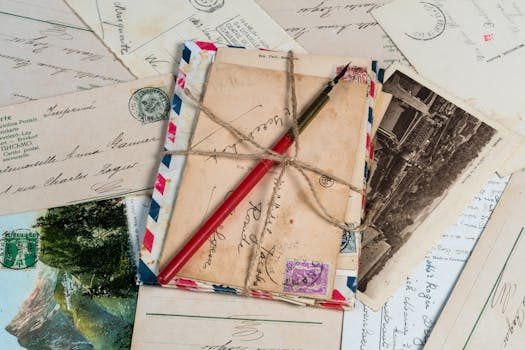
The straightforward truth is that a postcard’s era and location are the two biggest factors in how collectible it is. They’re not separate things eitherâthey work together. A Golden Age (1898â1915) postcard of a small town in rural France is a completely different animal from a 1950s chrome card of a Miami Beach hotel. Different printing methods, different paper, and different cultural moments make each combo unique. A linen postcard from the 1940s captures roadside America with exaggerated colors and dreamy skies. An early chrome card shows the same scene with photographic realismâsharper, more modern, but often missing the charm collectors look for. Location adds another layer. Postcards from well-documented cities like Paris or New York are everywhere. Cards from rural Alaska or a tiny village in the Italian Alps? Not so much. When you match a desirable era with a scarce location, you end up with a niche that’s both personally satisfying and commercially smart. Understanding that interplay is what separates a casual buyer from a real collector.
Golden Age Postcards (1898â1915): The Foundation of the Hobby
If you’re serious about vintage postcard collecting, the Golden Age is where you want to spend most of your learning time. This period, roughly from the late 1890s to the start of World War I, was when postcard production and mailing really exploded. The big technical change was the divided backâbefore 1907, the address went on the front of the card. After that, the back was split between the message and the address, leaving the front for just the image. The most desirable Golden Age cards are often heavily embossed, with detailed borders and raised details that catch the light. Some used early photographic techniques that give them a soft, almost painterly look. In the US, the Detroit Publishing Company made some of the finest cards of the era. Europe led in printing innovation, especially Germany and France. German printers produced cards with color lithography that still looks vibrant more than a century later. French cards from this time often show Art Nouveau design, especially in Parisian scenes and advertising cards. When shopping for Golden Age cards, condition is critical. Corner wear is normal, but stay away from heavy creases, stains, or writing that covers the image. A clean card with a readable postmark from a notable location can be worth several times more than a similar card in rough shape. Watch out for fakes. Some modern reproductions copy Golden Age designs and try to pass as originals. Learn to feel the paperâoriginal Golden Age cards have a distinct, slightly rough texture that modern printers can’t easily copy. Look for signs of age: yellowing, foxing, and the soft, muted colors that come from genuine vintage paper.
Mid-Century Modern: Linens and Early Chromes (1930sâ1960s)
The mid-century period gives you two different collecting paths: linen postcards and early chrome postcards. Linen cards, produced roughly from the 1930s through the 1950s, were printed on textured paper that gave them a unique look. The printing process boosted the colors, so you get skies that look impossibly blue and buildings that seem to glow. These cards are practically synonymous with American roadside cultureâdiners, motels, gas stations, national parks. If you want to capture the golden age of American road trips, linen postcards are the way to go. They’re also pretty affordableâmost common examples run between $5 and $20. Early chromes started showing up in the late 1930s but really took off after World War II. They were the first truly photographic postcards, with more realistic colors and sharper detail. Generally, early chromes are less collectible than linens from the same period because they don’t have that nostalgic, stylized quality that makes linens so appealing. That said, early chromes from specific locationsâlike early Disneyland, the 1939 New York World’s Fair, or the first Florida beach resortsâcan hold real value. Condition issues are different for this era. Linen cards can fade, especially if they were displayed in sunlight. Look for bright, strong colors. Early chromes can develop a chemical staining called “chalking,” where the image starts looking powdery or washed out. Avoid those. For budget-conscious collectors, focusing on late-era linens from under-collected states like Oklahoma, the Dakotas, or Montana can give you a rewarding collection without spending much.
Modern Postcards (1970sâPresent): What’s Worth Keeping?
A lot of people think modern postcards are worthless. That’s not entirely true. Most postcards printed after 1970 are mass-produced and have no collector value, but there are exceptions. The key is looking for limited print runs, unique artistic photography, or cards from iconic locations that have changed a lot since. For example, a postcard of the original World Trade Center from the 1970s is a piece of history, not just a souvenir. Artist-signed postcards or cards from small, independent publishers can also hold value. The rule of thumb is this: if the card was printed in a run of thousands and sold in a generic souvenir rack, it’s probably not worth more than the dollar you paid. If it was printed by a known artist or a small press and shows a specific, time-capsule view of a location, it could be worth holding. For collectors building a comprehensive collection of a specific city or region, modern cards can fill gaps that older cards can’t cover. Just don’t expect them to appreciate like a Golden Age card. Treat them as documentation, not an investment.
Collecting by Location: United States Regional Specialties
Focusing on a single US region can give your collection a strong narrative. The Northeast offers some of the earliest postcards in the country, especially from New England towns that were heavily photographed in the late 19th century. Cards from small Vermont villages or coastal Maine can be scarce and valuable, especially if they show buildings or landscapes that no longer exist. The South has a different appeal. Civil War sites, early Florida development, and New Orleans scenes are popular sub-collections. Postcards from the Deep South are often harder to find in good condition because of the climateâhumidity and heat degrade paper faster. The Midwest offers a hidden treasure trove for patient collectors. Small-town postcards from states like Iowa, Nebraska, and Kansas are abundant because rural communities were well-documented, but they’re not widely collected. You can often find boxes of them at estate sales for very little money. The West is where the geography gets spectacular. National park postcards from Yellowstone, Yosemite, and the Grand Canyon are always in demand. Route 66 postcards from the 1940s and 1950s command a premium because of the nostalgic road-trip appeal. Alaska and Hawaii postcards are rare and expensive relative to the continental US. If you’re building a regional collection, prioritize condition over quantity. One excellent card of a specific location is better than ten worn-out examples.
European Vintage Postcards: The International Collector’s Path
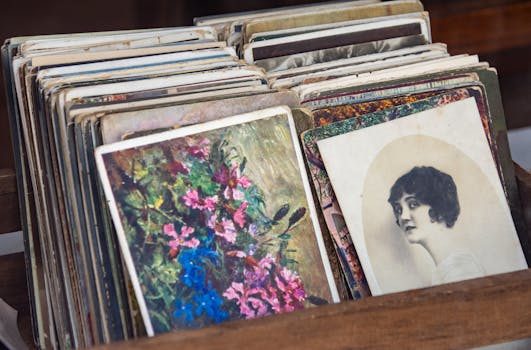
Collecting European postcards brings in new variables. French postcards from the early 1900s are among the finest ever produced. The Art Nouveau style is highly sought after, and cards by artists like Alphonse Mucha are legitimate works of art on paper. German postcards from the same period are known for their printing qualityâsharp, colorful, and durable. German cities like Berlin, Munich, and Hamburg are well-documented. British postcards have a different flavor. Seaside scenes from places like Blackpool and Brighton, royal events, and London views are common. The market for British cards is active, but prices are generally lower than for high-end French or German cards. Italian postcards from the early 20th century often focus on classical ruins and early tourism in Rome, Venice, and the Amalfi Coast. The challenge with European cards is condition. Many were stored poorly or mailed without envelopes, so edge wear and stains are common. Language can also be a barrier when researching subjects or postmarks. If you’re considering a European focus, start with a single country or a single city. Paris is an obvious choice because there’s a large supply and a well-established market. For a more challenging and potentially rewarding path, look at smaller European countries like Switzerland, the Netherlands, or Austria. Their postcard production was smaller, and quality cards can be surprisingly affordable.
Asian and Other Global Markets: Hidden Gems and Risks
The market for postcards from Asia, Africa, and South America is smaller but growing. Japanese postcards from the early 20th century are particularly interesting because they combine Western printing techniques with traditional Japanese subjects like geishas, temples, and landscapes. Chinese postcards from the same period, especially those showing the treaty ports of Shanghai and Hong Kong, are highly collectible but also heavily faked. The risk of buying a modern reproduction of a rare Chinese view card is real. Indian postcards from the British Raj era show colonial life, architecture, and daily scenes that are historically significant. The condition of cards from tropical regions is often poor because of humidity and insect damage. If you specialize in these markets, you need to be willing to accept lower condition standards or pay a premium for truly clean cards. Sourcing is the main challenge. Specialty dealers who focus on Asian or African postcards are rare. Online auctions are the primary channel, but you have to know exactly what you’re looking at. Do your homework on paper types, printing methods, and known publishers before spending significant money.
Era vs. Location: Which Should Drive Your Collection Strategy?
This is the central decision for any collector. Your choice will determine how you spend your money, your time, and your research energy. If you prioritize era, you’ll become an expert in the production techniques, publishers, and condition issues of that time. You’ll likely build a deep collection of cards from a single period, spanning multiple locations. The benefit is deep expertise, but the risk is ending up with many cards from common locations. If you prioritize location, you’ll specialize in a specific city, state, or region. You’ll collect cards from that location across all eras, which gives you a chronological view of how that place changed. The benefit is a strong narrative, but the risk is ending up with many modern cards that have low individual value. The best approach for most collectors is to combine both. Pick a specific combinationâlike “1940s linen postcards of small-town Iowa” or “Golden Age postcards of Paris.” This gives you a clear focus, a manageable search area, and a collection that tells a specific story. If your budget is tight, focus on early chromes from a less popular region. If you have more disposable income and a passion for history, go for Golden Age cards from a major European city. Write down your focus and stick to it for six months. You’ll be surprised at how much more satisfying your collection becomes.

Essential Tools for the Era-and-Location Collector
You don’t need much to get started, but a few tools will save you money and frustration. Archival sleeves and albums are non-negotiable. Store your cards in acid-free, PVC-free pages to prevent chemical damage over time. Many collectors find that a dedicated binder with archival pocket pages works well for both storage and display. A magnifying loupe is essential for inspecting conditionâyou need to see the difference between a tiny crease that’s acceptable and a surface scratch that ruins the card. A UV-protective frame is a good investment if you plan to display cards. Direct sunlight will fade any postcard within months. For research, have a good reference book on the specific era or location you collect. A book on Detroit Publishing Company cards, for example, will help you identify genuine examples and spot fakes. A dedicated database or spreadsheet is helpful for tracking your collection by era, location, publisher, purchase date, and price paid. This becomes invaluable when you need to evaluate whether you’re overpaying for a card. A simple three-ring binder with archival pages works well for storage and display. Keep your collection organized from day oneâit’s much harder to go back and catalog fifty cards than it is to log each one as you buy it. If you’re just starting out, a basic kit of archival postcard sleeves and a magnifier can help you inspect and protect your finds from the very beginning.
Common Mistakes When Mixing Eras and Locations
The most common mistake is assuming that all vintage postcards are valuable. A 1970s chrome postcard of a generic beach is not worth more than a dollar. Don’t confuse age with rarity or desirability. Another mistake is buying faded linen postcards thinking the soft, washed-out colors are a sign of age or patina. Faded cards have significantly lower valueâlook for examples with strong, original color. Location authenticity is another trap. A postcard may be labeled as showing a specific city, but the image could actually be from somewhere else entirely. Verify the scene using historical maps or other reference images. The impact of the postmark is also frequently underestimated. A clean postmark from a notable dateâsay, a World War II-era postmark from a military baseâcan add significant value. A card with no postmark or a common date is worth less. Finally, don’t neglect to specialize. Trying to collect everything from everywhere is a recipe for a disorganized, low-value collection. It’s better to have fifty excellent cards of a single theme than five hundred random cards of mixed quality.
Where to Buy: Matching Sources to Your Collecting Goals
Different sources serve different purposes. eBay is the biggest marketplace, offering broad selection and competitive pricing. The downside is condition inconsistency and the risk of fakes, especially for Golden Age cards. Always scrutinize photos and ask for detailed shots of corners and the back. Etsy is better for curated, ready-to-buy collections. Sellers often specialize and describe condition accurately, but prices are usually higher. For rare finds and networking, nothing beats a local antique show or a postcard club meeting. You can examine cards in hand, negotiate prices, and learn from other collectors. Estate sales are where the bargains are. You can sometimes buy entire lots of postcards for a few dollars. The tradeoff is that you have no research time and must judge condition quickly. If you’re focused on a specific era or location, make a list of specialty dealers who focus on that niche. They’re worth paying a premium to because they verify authenticity and condition. A simple checklist for evaluating a seller: do they provide clear photos of front and back? Do they describe condition honestly, including flaws? Do they have a return policy? A seller who ticks all three boxes is likely trustworthy.
Building a Display That Tells a Story
A collection organized by era and location can become a visual narrative. Instead of hanging random postcards, group them by theme. A “Route 66 in the 1950s” display might include six linen postcards showing motels, diners, and gas stations along the highway. A “Paris 1900” display could feature Golden Age cards of the Eiffel Tower, the Seine, and the Grand Palais. When framing, use UV-protective glass to prevent fading. Keep cards away from direct sunlight. For albums, use archival pages that let you see both the image and the postmark. Label each card with the era and locationâthis turns your collection into a reference library you can share with others. Avoid over-crowding the display. Give each card room to breathe. A well-edited selection of twenty cards is more impressive than a wall covered in random examples.
Final Thoughts: Starting or Refining Your Collection Today
Vintage postcard collecting is a hobby that rewards focus and patience. The most satisfying collections aren’t the largestâthey’re the most intentional. Pick one combination of era and location that genuinely interests you. Start small. Buy the best condition card you can afford in that niche. Learn everything you can about that specific combinationâthe publishers, the printing methods, the typical price ranges. As your knowledge grows, your collection will gain both personal and monetary value. The best time to start is now. Visit a local antique show, check a reputable online seller for a card from your chosen focus, and make your first intentional purchase. The world of vintage postcards is deep, and there’s always something new to discover.