Getting Started in Coin Collecting: A Practical Guide to Types, Values, and Storage
If you’re looking for a beginner coin collecting guide that gets to the point, you’re in the right place. Coin collecting is one of the oldest hobbies around and stays popular for good reasons. It’s accessible, educational, and there’s a real thrill in finding something unexpected. But it’s also an area where beginners can lose money, buy the wrong things, and store coins in ways that destroy value before they even know what they have. This guide covers three things every new collector needs to understand: the types of coins you’ll run into, how to figure out what a coin is actually worth, and how to store your collection properly. I want to give you a practical roadmap that helps you avoid the common beginner mistakes I see all the time. This isn’t a get-rich-quick guide. It’s a starting point for building knowledge that will serve you for years.

Why Start Coin Collecting? The Real Appeal
People collect coins for several genuine reasons, and it’s worth being honest about what you can realistically expect. The historical connection is a big one. Holding a coin that circulated 100 years ago connects you to a different era in a tangible way. The thrill of the hunt is another major factor. Finding a key date coin in a dealer’s junk box or a roll of half dollars from the bank can be genuinely exciting. There is also the potential for long-term value. Some coins appreciate over time, and smart purchases can hold or increase in value. However, most common coins will not make you rich overnight. The satisfaction of building a themed collection, whether it’s Lincoln cents from a specific decade or silver dimes from the 1940s, is a quiet but deep reward. The entry cost is low. You can start collecting with pocket change and a cheap album. Many circulating coins are inexpensive and widely available. Be prepared for the fact that some coins are common and worth face value, while rarer pieces require patience, research, and deeper pockets. The hobby rewards knowledge, not impulsive buying.
Understanding the Main Coin Types for Beginners
As a new collector, you’ll encounter a few distinct categories of coins. Each has its own characteristics, typical value range, and collecting purpose. Here’s a practical breakdown:
Circulating Commemoratives are coins issued by the U.S. Mint (or other mints) that are intended for general circulation but honor a specific person, place, or event. Think of the 50 State Quarters program, the America the Beautiful quarters, or the Westward Journey nickels. These are very common and usually worth little more than face value unless they are uncirculated or have a mint error. They are collected for the design series, not for rarity. A full set can be assembled for under $20 from circulation. Beginners who want a structured way to organize these can use a simple coin collecting folder designed for state quarters or similar sets.
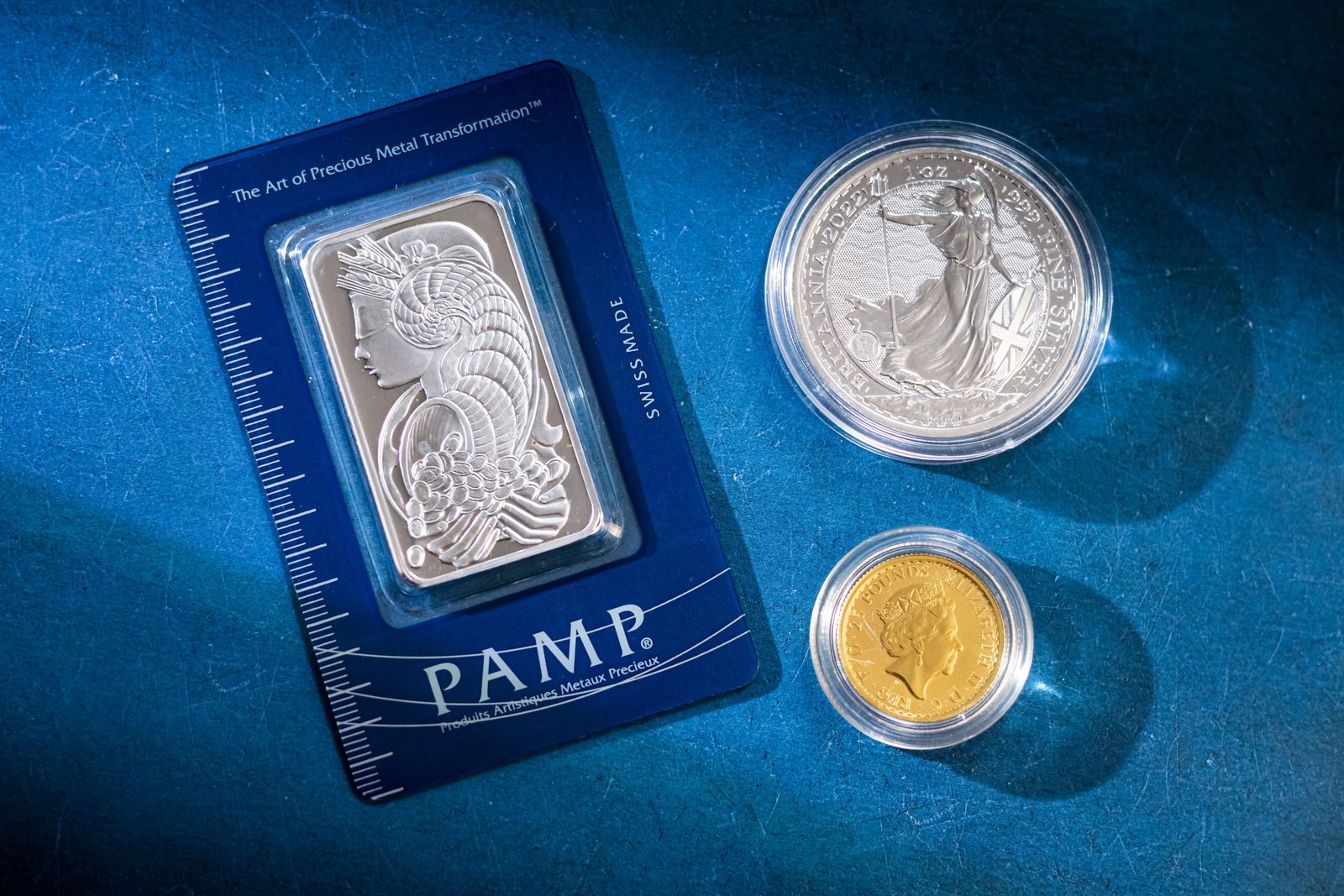
Bullion Coins are struck primarily for investors who want to own gold, silver, platinum, or palladium in a recognizable, government-backed form. Examples include the American Silver Eagle, American Gold Eagle, and Canadian Maple Leaf. Their value mostly comes from the precious metal content, plus a modest premium for the minting and packaging. A beginner might buy a silver bullion coin for around $25-$30 above the spot price of silver. These coins are collected for their metal weight and are a straightforward way to invest in precious metals while enjoying a coin design.
Proof Coins are specially made for collectors, not for circulation. They are struck on polished planchets with polished dies, often twice, resulting in a sharp, mirrored finish and frosted design elements. Proof coins come in special packaging from the mint and are generally more expensive than their business-strike counterparts. A proof coin might cost $5 for a common modern issue, but a classic proof from the 19th century can be worth thousands. Proofs are collected for their beauty and pristine condition.
Error Coins are coins with minting mistakes: off-center strikes, double dies, clipped planchets, or missing elements. Some error coins are highly sought after and can command significant premiums, even from modern coins. A 2005 Kansas quarter with a significant off-center strike might sell for $50. Error coins require careful authentication because fakes exist. They are collected for their rarity and the story behind the mistake. Beginners should approach error coins with caution and rely on reputable dealers or certification.
Legacy Coins include the classic series that have been collected for generations: Morgan dollars, Mercury dimes, Walking Liberty half dollars, Indian Head cents, and Buffalo nickels. These coins are collected for their design, historical significance, and potential value. A common-date circulated Morgan dollar might cost $30, while a key date can be thousands. These are the heart of traditional coin collecting.
How to Evaluate a Coin’s Condition (Grade)
A coin’s grade, or condition, is one of the most important factors in determining its value. As a beginner, you don’t need to be a professional grader, but you need to understand the basic scale and what to look for. The standard coin grading scale runs from Poor (P-1) to Perfect Mint State (MS-70). For practical purposes, you’ll mostly encounter these grades as a beginner:
- Good (G-4): Heavy wear. The date and major design elements are visible but worn. A ‘Good’ coin looks well-used and might have smooth surfaces.
- Very Good (VG-8): Moderate wear but all major design features are clear. Some fine details like hair strands or feathers may be partially missing.
- Fine (F-12): Moderate to heavy wear. The overall design is clear, but fine details are worn smooth. Luster is gone.
- Very Fine (VF-20 to VF-30): Light to moderate wear. The design is sharp with some signs of circulation. Luster may be present but muted.
- Extremely Fine (EF-40 to XF-45): Light wear only. All design details are sharp, and luster is still present. This is a common grade for older coins that were lightly circulated.
- About Uncirculated (AU-50 to AU-58): Only the tiniest amount of wear on the highest points of the coin. Luster is almost fully intact. AU coins look nearly new.
- Mint State (MS-60 to MS-70): No wear at all. Luster is full. The coin looks as it did when it left the mint. Higher MS numbers indicate fewer blemishes like bag marks, hairlines, or toning.
To evaluate a coin yourself, get a 10x magnifying loupe. Look at the high points of the coin: the cheek of a bust, the eagle’s feathers, the hair details. Any wear there is a sign of circulation. Also check the luster â the cartwheel effect of light as you tilt the coin. A mint state coin will have a lively, rotating luster. A worn coin will have flat, lifeless surfaces. Always handle a coin by its edge. Fingerprints on the surfaces can reduce value, especially on proof and mint state coins. Do not clean coins. Cleaning removes the original surface and patina, instantly devaluing a coin by a significant percentage, often 50% or more. A quality 10x coin loupe magnifier is an essential tool for this process.
What Determines Coin Value? Beyond Just Rarity
New collectors often think age equals value. A Roman coin from 300 AD might be worth $20 because it’s common. A 1913 Liberty Head nickel is worth millions because only five are known. Value is driven by a combination of factors, not just age. Let’s break them down:
Mintage Numbers. The number of coins minted for a particular year and mint mark is the starting point. Lower mintage generally means higher potential value, but demand matters too. A coin with a mintage of 100,000 that nobody wants might be worth $10. A coin with a mintage of 10 million that is heavily collected might be worth $50 in high grade.
Condition (Grade). As mentioned, this is critical. A common coin in gem uncirculated condition can be worth 100 times more than the same coin in Good condition. For example, a 1934-D Walking Liberty half dollar in VF-20 is worth about $15. In MS-65, it’s worth several hundred dollars. Invest in the best grade you can afford for the coins you buy.
Demand. Some series are heavily collected century after century. Morgan dollars, Mercury dimes, and Lincoln cents have massive collector bases. Other series, like modern presidential dollars, have low demand, so even low mintage issues remain cheap.
Metal Content. For bullion and many older coins, the silver, gold, or copper content is the floor value. A pre-1965 U.S. dime contains about $2 worth of silver at current spot prices. The coin’s numismatic premium (extra value due to condition or rarity) sits on top of that melt value.
Historical Significance. Coins from historically important periods or events often command premiums. The 1794 Silver Dollar is iconic. Challenged proofs from the 20th century tie into specific historical contexts. But this is mostly a factor for advanced collectors.
Understand the difference between retail and wholesale. Retail is what you pay at a coin shop or online. Wholesale is what a dealer will pay you for your coin. That gap often ranges from 20% to 50% or more for common coins. You will likely never get back exactly what you paid for a coin unless it appreciates significantly or you buy at wholesale (which is hard for beginners). Focus on buying coins you genuinely enjoy, not as investments.
Common Beginner Mistakes That Cost You Money
Every experienced collector has made these mistakes. Save yourself the time and money by avoiding them from the start.
1. Cleaning Coins. This is the single most destructive mistake. I see it all the time. A collector finds an old coin, thinks it needs to be shiny, and scrubs it with baking soda, polish, or even a pencil eraser. The result is a coin with scratches, removed patina, and a ruined surface that is immediately downgraded by three to four grade points, wiping out 50% or more of its value. What to do instead: Never clean a coin. If you absolutely need to remove dirt, use 100% acetone (not nail polish remover) in a well-ventilated area and a gentle dip, but only for specific circumstances and after you’ve done your homework.
2. Buying Random Coins Without Research. It’s tempting to see a flashy proof coin or a Morgan dollar at a flea market and grab it. But without knowing the market price, you will overpay. What to do instead: Use a reference like the Red Book (A Guide Book of United States Coins) or check online price guides like PCGS CoinFacts before buying. Compare prices across a few reputable dealers. A current Red Book of United States Coins is a wise investment for any beginner.
3. Paying Inflated Auction Prices. Online auctions like eBay can be great, but also dangerous. You can get caught in bidding wars and pay far more than a coin is worth. What to do instead: Set a maximum price based on solid research. Use ‘sold listings’ to see what people actually paid. Be willing to walk away. The deal will come around again.
4. Poor Storage Leading to Damage. I’ve seen beautiful coins ruined by storing them in PVC flips, damp basements, or direct sunlight. PVC causes a green slime. Humidity causes spotting and corrosion. Temperature swings cause toning that collectors hate (or love, but you don’t want to gamble). What to do instead: Use proper storage from day one. Cardboard folders with Mylar slides, inert plastic flips, or albums. Keep your coins in a stable environment with low humidity. Do not store them in a garage or attic.
Coin Storage: The Basics Every Collector Needs
Proper storage is not optional. It’s how you preserve the condition and value of your collection. The three main starting options are folders, flips, and albums.
Cardboard Folders (e.g., Whitman, Littleton). These are the classic, inexpensive storage for circulating coins. They have cutouts for each date and mint mark of a series. You slide the coin into the hole. Pros: Cheap ($5-$10), great for building a set from pocket change, easy to label and organize. Cons: Low protection from environmental damage, coins are not sealed, you can’t see the reverse without removing the coin, and the cardboard edges can wear over time. Best for: Beginner sets of modern quarters, dimes, nickels, cents.
Plastic Flips (2×2 Flips). These are small cardboard squares with a Mylar or Melinex window. You staple the coin inside. Pros: Excellent protection for individual coins, cheap (pennies each in bulk), widely available, you can write information on the cardboard. Cons: Not great for viewing the coin from both sides easily, stapling can damage the coin if not careful, not archival quality for long-term storage unless the plastic is inert. Best for: Individual coins you want to protect but don’t need to display in a binder immediately.
Albums (e.g., Dansco, Whitman Albums). These are binders with printed pages that have clear plastic pockets or metal slides for each coin. Pros: Excellent protection, allows you to see both sides of the coin, great for showing off your collection to others, professional appearance. Cons: More expensive ($15-$40 per album), can be bulky, not all series have available albums. Best for: Completing sets of classic series like Mercury dimes or Walking Liberty half dollars.
For all three, make sure the plastic used is inert. Avoid PVC at all costs. Look for ‘Mylar’, ‘Melinex’, or ‘Polypropylene’ on the package. SAFE (a brand) flips are a good choice. When storing, keep the boxes or albums in a cool, dark, dry place. A bookshelf in a climate-controlled room is perfect. Avoid basements, attics, or anywhere with high humidity.
Storage Upgrades: When and Why to Invest More
As your collection grows and you acquire higher-value coins, you’ll want to upgrade your storage. Here are the next steps beyond folders and basic flips.
Rigid Holders (Air-Tites). These are small, hard plastic capsules that snap shut and cradle the coin. They come in sizes for each coin diameter. Pros: Excellent protection from physical damage, clear view of both sides, airtight (hence the name), stackable, and affordable. A capsule costs about $0.50 to $1.00. Cons: Bulky to store many in a binder, not ideal for very high-end coins you want professionally graded. Best for: Valuable single coins, proof coins, bullion coins. If you have a silver eagle worth $30, a capsule is a wise investment.
Coin Tubes (for Bullion). These are cylindrical tubes that hold a specific number of bullion coins, typically 20 to 25. They are great for stacking silver or gold. Pros: Space-efficient, cost-effective (often under $10 for a tube), keep coins separate and protected. Cons: Not for display, not suitable for collectible coins beyond bullion. Best for: Stacking silver eagles, maples, or other bullion coins.
Professional Slabs (PCGS, NGC). This is the gold standard for high-value collectible coins. A slab is a tamper-evident, hard plastic holder that includes a grade label from a third-party grading service. Pros: Provides an expert grade, authenticates the coin, protects it completely, and makes it easy to sell in the future. A slabbed coin is liquid. Cons: Expensive (grading costs $25 to $100+ per coin depending on service and shipping). Only cost-effective for coins worth $100 or more. Best for: High-value coins, key dates, proofs, error coins.
The practical rule: If you have a coin worth $50, a $0.50 Air-Tite capsule is a good buy. If it’s worth $500, a $30 grading fee might be worth it. Avoid slabbing common coins worth $20.
Comparing Storage Methods: What’s Best for Your Collection?
Choosing the right storage depends on your collection goals, budget, and how much you value display. Here’s a quick comparison to help you decide:
- Cardboard Folders: Cost ($2-$10). Protection (Low). Viewing (Moderate â you can’t see reverse easily). Space Efficiency (High for sets). Best for: Budget-friendly set building, pocket change collection, absolute beginners.
- Plastic Flips (2×2): Cost ($0.05-$0.20 each). Protection (Medium â good for single coins). Viewing (Moderate â two-sided but stapled card). Space Efficiency (Low â each in a separate envelope). Best for: Individual coins you want to label and store in a shoe box or safe.
- Albums: Cost ($15-$40). Protection (High â secure, archival). Viewing (Excellent â display both sides). Space Efficiency (High â albums on a shelf). Best for: Series collectors, those who want to show off their coins, nearly all intermediate collectors.
- Rigid Holders (Air-Tites): Cost ($0.50-$1.00 each). Protection (Very High). Viewing (Excellent). Space Efficiency (Moderate â stackable but bulky). Best for: Valuable single coins, proof coins, bullion, coins you want to handle safely.
- Slabs: Cost ($25+ per coin). Protection (Maximum). Viewing (Excellent). Space Efficiency (Moderate). Best for: High-value collectibles, coins you intend to sell or trade, proof of authenticity.
What I recommend for most beginners: Start with a Whitman folder for a series you like (like Lincoln cents or State Quarters). That’s $5. Then buy a few SAFE 2×2 flips for any nice single coins you find. As you get more serious, get a Dansco album for your favorite series. That $25 investment will keep your $50 coins safe for decades.
Where to Find Coins to Start Your Collection
Now that you know what to look for, where do you find coins? Here are realistic sources for a beginner, ranked by access and risk:
Pocket Change. The cheapest and easiest source. Modern circulating coins can yield state quarters, presidential dollars, and occasional errors. It’s a great way to practice identification and grading for free. You won’t find rare key dates, but you can build a full set of state quarters from the change in your pocket over a year.
Local Coin Shops (LCS). This is the best place for a beginner. A good LCS owner will answer your questions, let you look at coins, and give you fair prices. You can handle the coins before you buy. They often have junk bins where common coins are sold at spot or slightly above. The learning curve is low and the risk is low. Build a relationship with a dealer you trust.
Coin Shows. If you have one nearby, a coin show is excellent for selection. You’ll see hundreds of dealers in one room, offering everything from $1 coins to six-figure rarities. Prices can be competitive. The downside is that it can be overwhelming. Go with a list of what you want and a budget. Don’t impulse buy.
Online Retailers (APMEX, JM Bullion, eBay). Online is convenient. APMEX and JM Bullion are reputable for bullion and many collectibles. eBay offers the widest selection, but it’s full of overpriced listings and fakes. Use eBay cautiously: check seller feedback, look at sold listings, and only buy from established sellers. Never trust a ‘rare’ coin from a seller with 98% feedback and 100 sales.
Estate Sales and Auctions. You can sometimes find hidden gems in estate sales, especially if you’re looking for older coins in small collections. Be prepared to inspect thoroughly, and most coins will be overpriced or in poor condition. It’s not a reliable source for a beginner.
My advice: Start with a local coin shop. Buy a few common coins in VF to AU condition. Then expand to online retail for the specific coins you want after you know prices. Avoid auction sites like eBay until you have enough experience to spot a bad deal.
Recommended Tools for the Beginner
Every collector needs a few basic tools. These are not optional if you want to grade and evaluate coins properly.
A Magnifying Loupe (10x is standard). The most important tool. You need to see small details: hair, feathers, die cracks, luster. A simple 10x loupe from Belomo or a cheap generic will do. Get one that is glass, not plastic, for clarity. Expect to pay $15-$30 for a decent one. I recommend the BelOMO 10x Triplet Loupe. It’s excellent for the price and will last for years.
A Soft Cloth. Microfiber cloth is ideal. You need a clean, lint-free surface to handle coins. Do not use paper towels (they scratch). A small cloth keeps the coin from sliding and protects it from your skin oils.
A Reference Book. The standard is the Red Book (A Guide Book of United States Coins, by R.S. Yeoman). It’s published annually and gives mintage figures, values for multiple grades, and historical information. It’s the one book every collector should own. You can also use PCGS CoinFacts online for free, but the book is more portable.
A Digital Scale (for Bullion Collectors). If you collect silver or gold, a digital scale that reads to 0.01 grams is helpful for verifying weight against fakes. Some common fakes are underweight. A cheap scale costs $10-$20. Don’t buy an expensive one unless you need laboratory precision.
You can find all these on Amazon. A loupe, a cloth, and a Red Book will set you back about $50 total. It’s a worthwhile investment before you spend $100 on coins.
Final Thoughts: Building Your First Collection
Coin collecting is a marathon, not a sprint. The key takeaways from this beginner coin collecting guide are simple: start with a theme (a series or type that interests you), buy the best quality coins you can afford within that theme, research every purchase, and store your coins properly from day one. Avoid the common mistakes of cleaning, impulse buying, and poor storage. Focus on learning to grade your own coins. Be patient. The best collections are built slowly, piece by piece, with knowledge and care.
Take the first step today. Find a local coin shop or buy a Whitman folder and a roll of quarters from the bank. You’ll be surprised how quickly the hobby grabs you. And when you’re ready, grab a loupe and a good reference book. They will more than pay for themselves.